Stories
Episode 5: My Husband Lost Everything When the Dead Lawyer's Original Letter Finally Exposed His Secret — Episode 5
My husband thought he had one final chance to save himself: convince everyone that my grandmother had legally transferred her fortune to him. But my sister finally revealed who had forged the documents, and the answer was someone Richard believed could never testify. Then the bank produced an original letter written by my grandmother before her death. It exposed the entire scheme, including the $2.4 million trust Richard had secretly tried to claim. But when he learned about my $86 million lo...
Full story · Fiction
Richard's final mistake was believing that a dead man couldn't defend his signature.
My sister Caroline was sitting across from me in Margaret Ellis's office, holding a photograph of a document she had kept hidden for years.
"The signature on that amendment wasn't my grandmother's," she whispered. "And I know who Richard used to create it."
Margaret placed her pen on the table.
"Tell us everything."
Caroline took a shaky breath.
"Four years ago, Richard asked me to witness documents connected to Eleanor's company shares. He told me everything had already been approved. I signed one statement without checking it properly. But seven years ago, something different happened."
I stared at her.
"Seven years ago?"
She nodded.
"Richard came to me with a letter supposedly written by Grandma's attorney, Samuel Whitmore. He said the attorney had prepared a new trust arrangement before he died. He asked me to help organize the paperwork."
Margaret leaned forward.
"Did you see the attorney sign anything?"
"No. But I remember the signature. It looked strange. Richard told me the attorney had changed his handwriting because of an illness."
I felt a chill.
Samuel Whitmore had died eight years earlier.
The beneficiary amendment was supposedly signed seven years ago.
I looked at Caroline.
"Why didn't you tell me?"
She started crying.
"Because Richard told me the documents were legitimate. And because he threatened to tell you that I had helped him forge the original company records if I ever questioned him."
I sat back.
For years, my sister had carried a secret that could have destroyed both of us.
"Did you help him forge anything?" I asked.
She shook her head.
"I never forged your signature. But I witnessed something I didn't understand, and I should have asked questions. I'm sorry, Ellie."
I didn't immediately forgive her.
Some wounds don't disappear simply because someone finally admits what happened.
Margaret asked Caroline to preserve every message, document, and travel record connected to Richard. She explained that the disputed signatures needed independent forensic examination and that the matter could involve serious allegations of fraud.
Then she opened the folder containing the latest bank correspondence.
"We have an appointment with Harbor National Trust tomorrow morning," she said. "They have located your grandmother's original letter and the historical trust records."
I looked at the documents.
"Will we finally know what Richard was trying to steal?"
Margaret nodded.
"If the records are complete, yes."
The following morning, we returned to Harbor National Trust.
Thomas Whitaker met us in a private conference room. Beside him sat Laura Bennett, the trust officer who had called me the previous afternoon.
A sealed archival folder rested between them.
Thomas began carefully.
"Mrs. Hayes, we've completed our preliminary review of the original trust documents. Your grandmother, Evelyn Parker, established a protected reserve arrangement before her death. The account was designed to preserve specific family assets and investment proceeds."
Laura opened the folder.
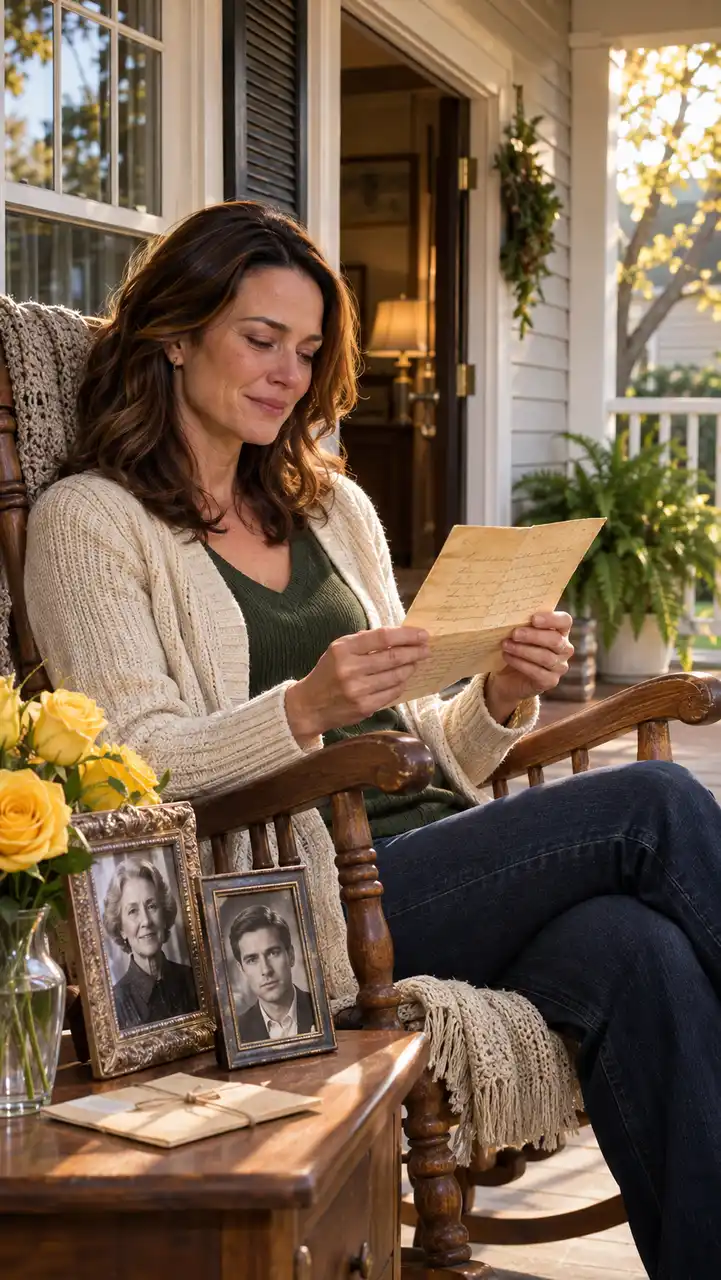
Inside was an original trust agreement, several account statements, and a handwritten letter dated three weeks before my grandmother died.
My name appeared on the first page.
Eleanor Hayes.
Beneficiary.
I felt my eyes fill with tears.
Laura explained that the account had been funded through several investments and property-related arrangements. The historical records showed an original reserve of approximately $2.4 million.
After reviewing the available statements and subsequent investment records, the bank had established that the assets had remained substantially intact, although some transactions required further reconciliation.
The current preliminary valuation was approximately $3.1 million.
I covered my mouth.
My grandmother had left me something I never knew existed.
But Margaret was studying another document.
"What about the beneficiary amendment?" she asked.
Laura turned to a separate file.
"The amendment naming Richard Hayes was submitted seven years ago. However, the trust agreement required authorization from the original trust protector. The person listed was Samuel Whitmore."
Margaret looked up.
"And he was deceased at that time."
"Correct."
Laura continued.
"Our archival records contain the original letter from Mr. Whitmore, dated several months before his death. It specifically prohibits any transfer of the beneficiary interest without Eleanor's independently verified consent."
She placed the letter on the table.
I recognized the signature immediately.
It was elegant, precise, and completely different from the signature on the amendment Richard had submitted.
But the most important discovery was attached to the letter.
A handwritten note from my grandmother.
It read:
'If anyone attempts to change Eleanor's inheritance without her knowledge, contact the independent trustee and preserve every original record. Richard has been asking questions about this arrangement. I no longer trust his explanations.'
I felt as though the air had disappeared from the room.
My grandmother had known something was wrong.
She hadn't told me because she wanted to protect me without destroying my marriage.
Laura continued explaining that the bank had frozen any disputed distribution while its legal team reviewed the attempted amendment. Richard had never become a valid beneficiary through that document.
Margaret requested certified copies and formal preservation of the historical records.
Then she asked the question I had been waiting to hear.
"Can you confirm whether the original attorney's signature was authenticated before the amendment was accepted?"
Laura shook her head.
"The historical file contains an administrative approval, but no independent verification record. We have referred the matter to our legal department."
Margaret nodded.
"That's important. We'll need the full submission history."
I looked at the handwritten letter again.
My grandmother had protected me from beyond the grave.
And Richard had spent seven years believing he could rewrite her final wishes.
But there was still the question of the company.
Over the next several days, Margaret coordinated with independent corporate counsel, forensic document examiners, and the attorneys representing the buyer.
The examination of the disputed signatures produced troubling preliminary findings.
The signature attributed to me on the ownership release showed characteristics consistent with a traced or reproduced signature rather than a naturally written one.
Caroline's supposed witness signature on the settlement agreement was also disputed. Her travel records supported her statement that she had been in Boston on the date shown.
The signature attributed to Samuel Whitmore required additional examination, but the date on the amendment and the attorney's documented death created an obvious problem.
Diane Porter's accounting records were independently reviewed as well.
They identified substantial payments to Cole Meridian Holdings that lacked adequate supporting documentation.
The buyer formally withdrew from the proposed transaction after concluding that the unresolved ownership and title disputes created unacceptable risks.
The building was no longer being sold.
Richard had lost the deal he had spent months arranging.
But he wasn't ready to surrender.
Three days later, he requested a private meeting with me.
Margaret advised against meeting him alone.
We agreed to meet in a conference room at her office.
Richard arrived without Vanessa.
He looked older than I remembered. His expensive suit was wrinkled, and the confidence he once carried like an accessory had disappeared.
He sat opposite me.
"Eleanor, we need to talk."
I folded my hands.
"We're talking."
He glanced at Margaret.
"Can we have a few minutes privately?"
"No," I replied.
He sighed.
"Fine. I made mistakes."
I looked at him.
"You forged my signature. You tried to take my grandmother's inheritance. You concealed company transactions and arranged a property sale without my authorization. Which mistake are we discussing?"
He rubbed his forehead.
"You don't understand the pressure I was under."
"Then explain it."
He looked away.
"The company had financial obligations. I needed the transaction to close. Patricia was demanding money, and Vanessa's business was involved in the arrangement. I thought I could resolve everything before it became a problem."
"By stealing from me?"
"I was going to compensate you."
I stared at him.
"With what? Money that already belonged to my family?"
He had no answer.
Then he leaned forward.
"I heard about the lottery."
My stomach tightened.
I hadn't told him.
But lottery claims were subject to public disclosure under the applicable state rules, and the winning ticket had already been claimed through the official process.
Richard gave a nervous smile.
"Eighty-six million dollars. That's a lot of money, Eleanor."
I said nothing.
"We're still legally married," he continued. "The ticket was purchased before the divorce was finalized. We need to discuss what belongs to both of us."
Margaret intervened.
"Any financial claims concerning the lottery proceeds will be handled through the divorce proceedings and applicable Connecticut law. There will be no informal agreement today."
Richard ignored her.
"I'm not asking for everything. Half would be fair."
I looked at him for a long moment.
Nineteen years earlier, I had sold my grandmother's jewelry to help him keep his business alive.
I had worked nights, missed family celebrations, and sacrificed opportunities because I believed we were building a future together.
Now he was sitting across from me demanding half of a fortune I had won through a six-dollar ticket.
"You told me I was leaving with nothing," I said.
He lowered his eyes.
"I was angry."
"You brought your mistress into our home. You handed me divorce papers on our anniversary. You told me the house and company were yours."
He looked up.
"I know."
"You don't get to rewrite that because I became wealthy."
He opened his mouth, but Margaret placed a document on the table.
It was a proposed settlement framework covering the divorce, the disputed ownership interests, and the separation of the relevant financial matters.
Richard's attorney had already received a copy.
The proposal did not promise him half my lottery winnings. Instead, it required a full financial accounting, recognition of my established company ownership, proper resolution of the property interests, and independent assessment of the disputed marital assets.
Patricia's documented investment claim would also be addressed through a separate agreement rather than being concealed or ignored.
Richard stared at the papers.
"You can't do this to me."
I shook my head.
"I'm not doing anything to you, Richard. I'm asking that the truth finally be written down."
He stood abruptly.
"You'll regret this."
Margaret remained seated.
"Mr. Hayes, please direct any further communication through counsel."
Richard looked at me one final time.
For nineteen years, I had waited for him to look at me with the same affection he showed during our first years together.
Now I understood that I had been waiting for a man who no longer existed.
He walked out.
The following weeks were difficult.
The company underwent an independent financial review. Several transactions were referred for further investigation. Richard stepped away from day-to-day management while the company addressed the findings.
The disputed property sale remained suspended, and the legal process continued.
Patricia reached a negotiated resolution concerning her documented original investment and the related financial claims. Vanessa resigned from her position with Cole Meridian Holdings and ended her relationship with Richard after discovering how much he had concealed from her.
Caroline gave formal statements about the documents she had witnessed and the circumstances surrounding Richard's requests.
She also apologized to me without asking for immediate forgiveness.
That mattered more than she probably realized.
The divorce took several additional months to finalize. Financial disclosure, property valuation, and the dispute concerning the lottery winnings required careful legal work. I followed Margaret's advice and made sure every asset and claim was addressed through the proper process.
I didn't spend the money recklessly.
I established a long-term financial plan, protected the funds through appropriate professional structures, and kept enough aside to support my future without depending on anyone else's promises.
My grandmother's trust was restored to its rightful beneficiary arrangements after the legal review confirmed the attempted amendment was invalid.
My thirty-percent ownership interest in Hayes Financial Group was formally recognized.
And the original office building was no longer being treated as Richard's personal property.
But the most important victory wasn't financial.
It happened on a quiet Saturday afternoon when Caroline came to visit me.
I had moved into a smaller home overlooking a wooded Connecticut neighborhood. It wasn't the mansion Richard had thrown me out of, but it felt more like mine than any place I had lived in nineteen years.
Caroline stood at the front door holding a small package.
"I found something while cleaning out Grandma's old storage boxes," she said.
Inside was a photograph of the three of us.
My grandmother sat in the middle, smiling, with her arms around both of us.
On the back she had written:
"My girls. Always remember that family is something you protect with love, honesty, and courage."
I looked at Caroline.
"I don't know if I can trust you again immediately."
She nodded.
"I understand."
"But I don't want to spend the rest of my life hating you."
She started crying.
I hugged her.
It wasn't the same relationship we had before.
Maybe it never would be.
But it was a beginning.
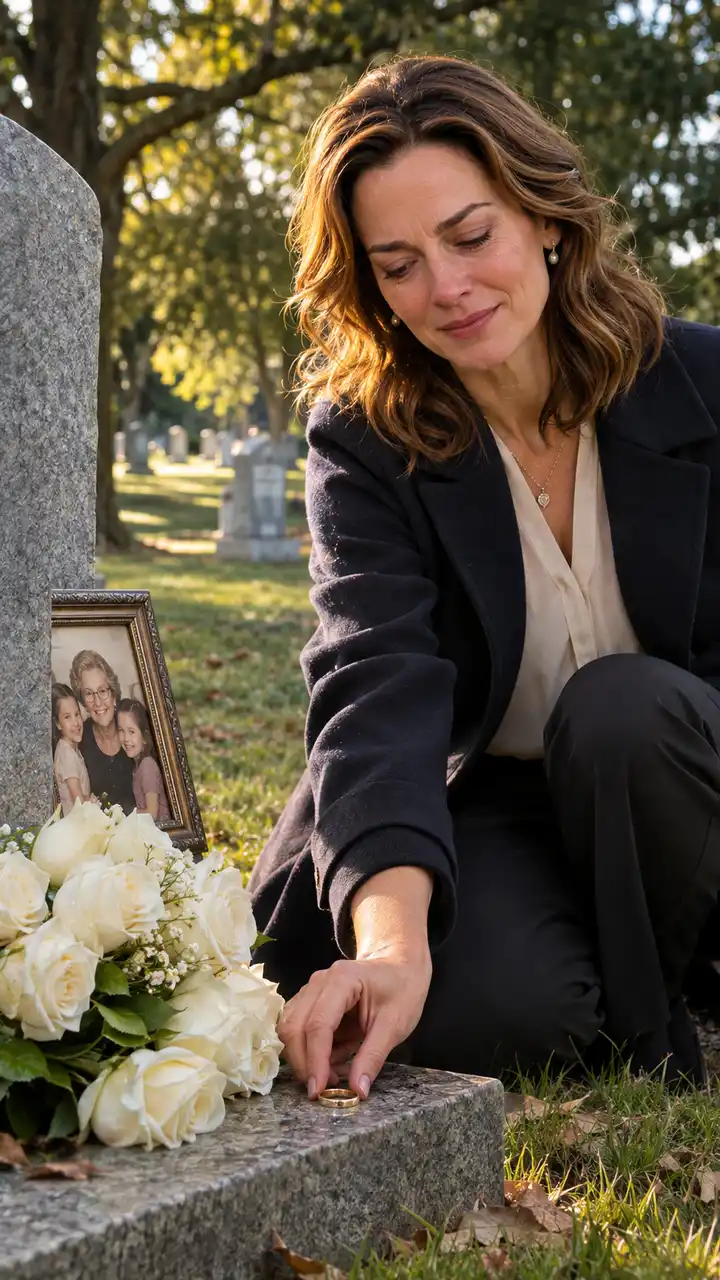
Several months later, I visited my grandmother's grave.
I brought white roses and placed them beside her headstone.
For a long time, I stood quietly, thinking about the little girl who had listened to her stories, the young woman who had sacrificed everything for her marriage, and the forty-five-year-old woman who had finally learned to protect herself.
I had won $86 million.
I had recovered my inheritance.
I had reclaimed my ownership in the company I helped build.
But none of those things could give me back nineteen years of believing someone loved me in the way I loved him.
And strangely, I no longer wanted those years back.
They had taught me something I should have learned much earlier.
Being generous doesn't make you weak. Trusting someone doesn't make you foolish. And leaving a person who repeatedly betrays you isn't failure.
It's choosing yourself.
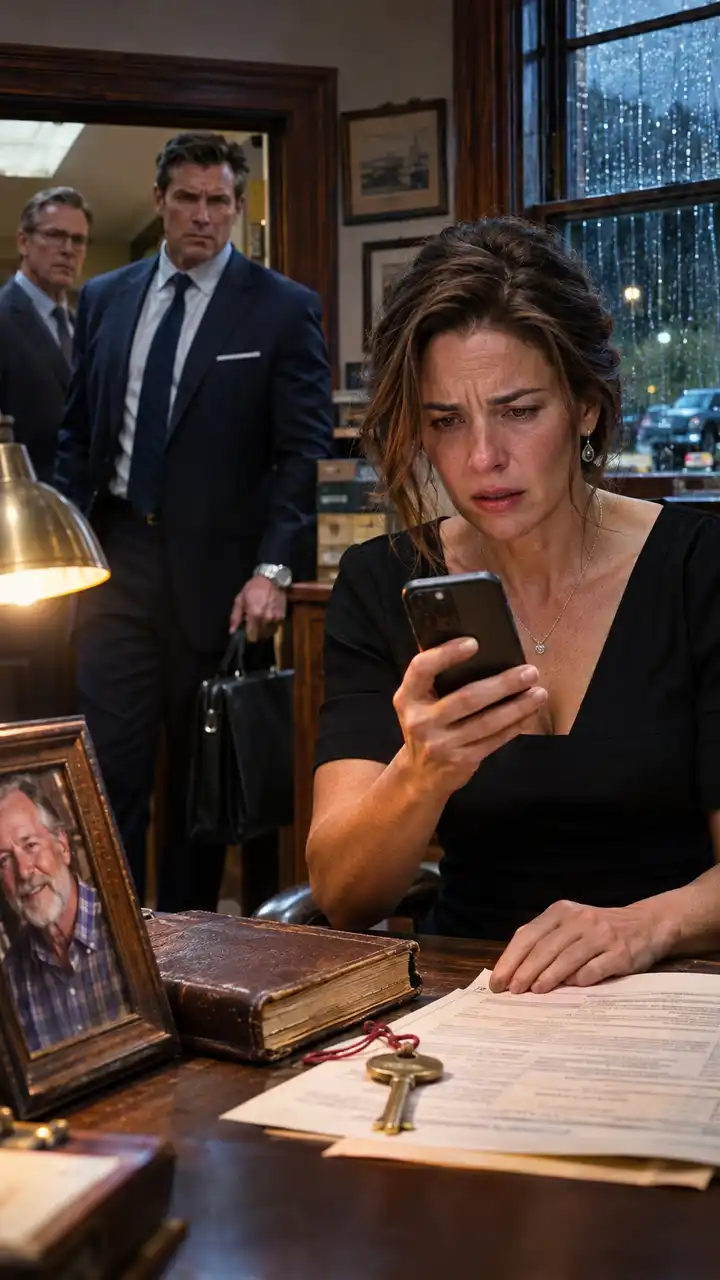
My phone vibrated.
A message from Margaret appeared.
The divorce was officially finalized.
I read it twice, then looked toward the afternoon sunlight filtering through the trees.
I removed my wedding ring from my handbag. I had kept it for the legal proceedings, but I no longer needed it.
I placed it gently beside the roses.
Then I whispered the words I wished my grandmother could have heard.
"I finally protected what you left me. And this time, I protected myself, too."
For the first time in nineteen years, I wasn't somebody's wife, somebody's business partner, or somebody's forgotten sacrifice.
I was Eleanor Hayes.
And my next chapter belonged entirely to me.
Take a break. Sharpen your mind.
Trivia, word games, puzzles and more—fresh challenges are waiting every day.
Explore all gamesRelated Articles
Episode 5: The Truth About My Father's Death Destroyed Everything My Husband's Family Built — Episode 5
I went to the place where my father supposedly died expecting answers. Instead, I discovered a hidden recording, an original financial ledger, and the truth about why my husband had married me. Patricia finally confessed that she had helped my father protect my inheritance before his death. But the biggest revelation came when we played the second recording. My father's final words exposed a thirty-year financial conspiracy, and Frank Harrison's voice revealed what really happened on the nigh...
My Brother Sold Our Father's Store Behind My Back—But He Didn't Know Dad Had Left Me the One Document That Could Destroy His Deal | Episode 1 of 5: The Sale Nobody Told Me About — Episode 1
My brother announced the sale of our father's hardware store while I was still wearing the black dress I'd worn to Dad's funeral. He had already signed an agreement with a developer for $2.4 million. Then he handed me an envelope containing an eviction notice and told me I had thirty days to leave the building where I'd worked for twenty-two years. Everyone at the funeral luncheon went silent. My brother thought he had inherited everything. But he didn't know what Dad had hidden in his office...
My Husband Invited His Parents to Move Into My House Without Asking—But He Didn't Know What My Grandmother Had Hidden in the Basement | Episode 1 of 5: The Moving Truck — Episode 1
I came home on a Friday afternoon and found a moving truck parked in my driveway. My husband's parents were carrying boxes into the house I'd spent eleven years paying for. His mother smiled and told me she'd finally have the master bedroom. When I demanded an explanation, my husband handed me a document and said he'd already transferred the house into his parents' names. Everyone expected me to cry, scream, and accept what they'd done. But then I noticed something strange about the paperwork...
Recommended for You
Episode 4: My Husband Finally Admitted Why He Married Me — Episode 4
My husband had just admitted that his father deliberately arranged our relationship. But the biggest shock came when my lawyer discovered that my father had changed his life insurance beneficiary three days before his death. The person he named wasn't my mother. It was someone connected to Daniel's family. Then we played the recording from the night my father died. Daniel's eleven-year-old voice could be heard in the background. He had witnessed something that night, and his father had spent...
Episode 3: The Photograph That Exposed My Husband's Family Secret — Episode 3
My husband stood in my grandmother's basement holding a photograph of my father, and then he said something that made my blood run cold: "Your grandmother wasn't the only one who lied." He turned the photograph over, revealing a handwritten message that connected his father to my family decades before Daniel and I ever met. But the worst discovery wasn't the photograph. It was the document hidden beneath it, showing that my mother and his father had once made a secret financial agreement invo...
Episode 2: The Envelope My Grandmother Was Afraid to Leave Behind — Episode 2
My husband sent me a message warning me not to visit my grandmother's attorney. That was how I knew I absolutely had to go. The next morning, I sat across from Richard Cole as he placed a sealed envelope on his desk. My grandmother had written my name on it two years before she died. But before I could open it, Richard showed me something even more disturbing: a bank transfer proving my husband had taken $86,000 from an account connected to my grandmother's estate. Then he revealed that Danie...
Join the discussion
No comments yet. Start the conversation.