Stories
My Aunt Hugged Me at My Mother's Funeral While Hiding the Money She Took From Our Family — Episode 3
The person who received the missing $9,700 was my own aunt. The same woman who cried beside me at my mother's funeral, helped me search for the truth, and claimed she had only witnessed my brother's fraudulent documents. When I confronted her, she admitted receiving the money but insisted it was something my mother had promised her. Then the independent accountant uncovered an email showing that the payment had been made using my employee credentials while I was hundreds of miles away. My aun...
Full story · Fiction
My aunt dropped the theater program when she saw me holding the financial report.
She was standing near the lobby doors, wearing the same dark cardigan she had worn during our mother's funeral.
"Margaret," I said. "We need to talk."
She looked at the document in my hand.
Then she looked toward the exit.
"Not here, Rebecca."
"The company receiving the $9,700 is registered in your name."
She closed her eyes.
For several seconds, neither of us moved.
I had spent weeks believing Aunt Margaret was simply someone who had made a terrible mistake by trusting Daniel. She had admitted witnessing our mother's signature, and she had helped me uncover the documents that exposed his scheme.
But now her name appeared on another suspicious transaction.
"Tell me why," I said.
She sat down on the lobby bench.
"Your mother owed me money."
I pulled up a chair.
"For what?"
Margaret explained that years earlier, she had lent our mother $12,000 when the theater was struggling to pay its employees. She had used part of her retirement savings and never demanded immediate repayment.
Our mother had gradually repaid most of it.
According to Margaret, the remaining balance was $9,700.
"Mom never told me about that debt."
"She didn't want you worrying about another financial problem."
"Then why was it recorded as a payment from the theater?"
Margaret folded her hands.
"Daniel told me he had arranged it with your mother. He said she wanted the theater to repay me before the building was sold."
I remembered our mother's handwritten note.
*I never agreed to put your name on this.*
"Did Mom authorize the payment?"
Margaret didn't answer.
That silence was enough to make me call Mr. Collins.
He arrived forty minutes later with the independent accountant, Ms. Foster, who had been reviewing the theater's financial records.
Margaret repeated her explanation.
Ms. Foster listened carefully before opening her laptop.
"There is a problem with the transaction date," she said.
She turned the screen toward us.
The $9,700 payment had been processed eleven months before our mother's death.
The authorization used my employee login.
But the login record showed that the transaction had been approved at 2:16 p.m. on a Tuesday.
I was in Columbus that day attending a technology conference. I had hotel receipts, conference registration records, and travel documentation.
I had not been anywhere near the theater.
"Someone used my credentials," I said.
Ms. Foster nodded.
"That's what the preliminary records suggest. We still need to establish exactly how access was obtained."
Margaret began crying.
"Daniel said he would handle everything."
I turned toward her.
"You knew he was using my name?"
She shook her head quickly.
"Not at first. He told me your mother had approved the repayment. I only learned about the false authorization later."
"And you said nothing?"
She pressed her hands against her face.
"He reminded me that I had signed the hospital document. He said if I told you about the payment, I would be responsible for everything too."
I felt the old hurt returning.
"You watched me question my own brother while you knew there was another payment."
"I was ashamed."
"You were protecting yourself."
She couldn't deny it.
Then she reached into her handbag and removed a small envelope.
"Your mother gave me this after she discovered the first payment."
Mr. Collins asked her to place it on the desk.
Inside was a handwritten letter dated three months before our mother's death.
It was addressed to Margaret.
Our mother wrote that she knew about the $9,700 transfer and had never approved it. She also wrote that she believed Daniel had used Margaret's company as a way to make the payment look like a legitimate reimbursement.
But the final paragraph was different.
*Margaret, I know you needed that money. I also know you did not ask Rebecca to approve it. Please tell her what happened before Daniel convinces you that silence is the only way to protect yourself.*
I read it twice.
My mother had known my aunt was involved.
She had given her an opportunity to tell me the truth.
Margaret had chosen not to.
"Why didn't you give me this letter when we found the yellow envelope?" I asked.
She whispered, "Because I thought Daniel would come after me."
Mr. Collins collected the letter for the independent review. He explained that Margaret's claim about the original loan would need supporting documentation and that the suspicious payment and false authorization would be handled through the appropriate investigation.
Nobody could simply decide that the money was legitimate because an old family debt might have existed.
I asked Margaret one final question.
"Did Mom ever tell you who was using my login?"
She looked toward the accounting room.
"She suspected Paul had given Daniel access. But she told me she wasn't sure whether Daniel was working alone."
That afternoon, Paul provided another written statement.
He admitted creating the false financial descriptions and allowing Daniel to use accounting records he should have protected. However, he denied personally approving the $9,700 transaction.
The investigation would have to establish who had accessed the system.
Daniel was questioned separately.
At first, he blamed Paul.
Then he blamed our mother.
Finally, he admitted arranging both payments, although he continued insisting that the money had been intended to solve temporary family problems.
He also admitted preparing the false repayment document bearing my name because he feared I would refuse to cooperate with the theater's sale.
"You could have asked me," I told him during our meeting with Mr. Collins.
Daniel stared at the floor.
"You would have said no."
"That was my right."
He nodded slowly.
For once, he didn't have another explanation.
The independent review eventually established that the theater's accounts had been manipulated and that multiple transactions required recovery and further investigation. The proposed sale was abandoned after the buyer withdrew from the disputed arrangement.
Paul lost his financial responsibilities and agreed to cooperate with the investigation. Margaret provided her records concerning the original loan and acknowledged that she had concealed what she knew. Daniel faced the consequences of the financial misconduct and the forged documents.
I didn't pretend that everything was repaired.
Some relationships don't return to what they were simply because people finally admit what they did.
But the theater survived.
With Mr. Collins helping us review the estate arrangements, the employees and longtime volunteers established an independent operating committee. I agreed to continue managing the theater temporarily, with financial oversight and shared reporting responsibilities.
We also arranged for the old theater to receive a small memorial plaque honoring our mother, Eleanor Hayes.
On opening night, I stood beside the stage while a group of children performed a play she had written years earlier.
One little boy forgot his line.
Instead of freezing, he looked toward the audience and made up something completely different.
Everyone laughed.
I laughed too.
It was the first time in months that I had felt my mother's presence without immediately remembering the betrayal.
After the performance, Margaret approached me.
She didn't ask for forgiveness.
She simply handed me a photograph of our mother standing on the theater stage, holding a paintbrush during the building's original renovation.
On the back, Mom had written:
*This place belongs to the people who keep showing up.*
I placed the photograph inside the blue leather ledger.
Daniel didn't attend the reopening.
I didn't know whether he ever would.
But as I was locking the office that night, Mr. Collins called me.
"Rebecca, there's one final document from your mother's estate that I think you should read."
He had found it among the original property records.
It was dated two weeks before her death.
Unlike the other documents, this one had been signed, witnessed, and properly filed.
It contained instructions about the theater's future and named the people she wanted involved in protecting it.
I unfolded the final page.
My name was there.
So was Daniel's.
But beneath our names was a third person.
Thomas Reed, our retired stage manager.
And beside his name, our mother had written one sentence:
*If either of my children tries to sell this theater without understanding what is buried beneath its stage, Thomas must tell them what happened in 1998.*
I looked up at Mr. Collins.
"What's buried beneath the stage?"
He slowly closed his folder.
"I think that's a question Thomas has been waiting twenty-eight years for someone to ask."
Take a break. Sharpen your mind.
Trivia, word games, puzzles and more—fresh challenges are waiting every day.
Explore all gamesRelated Articles
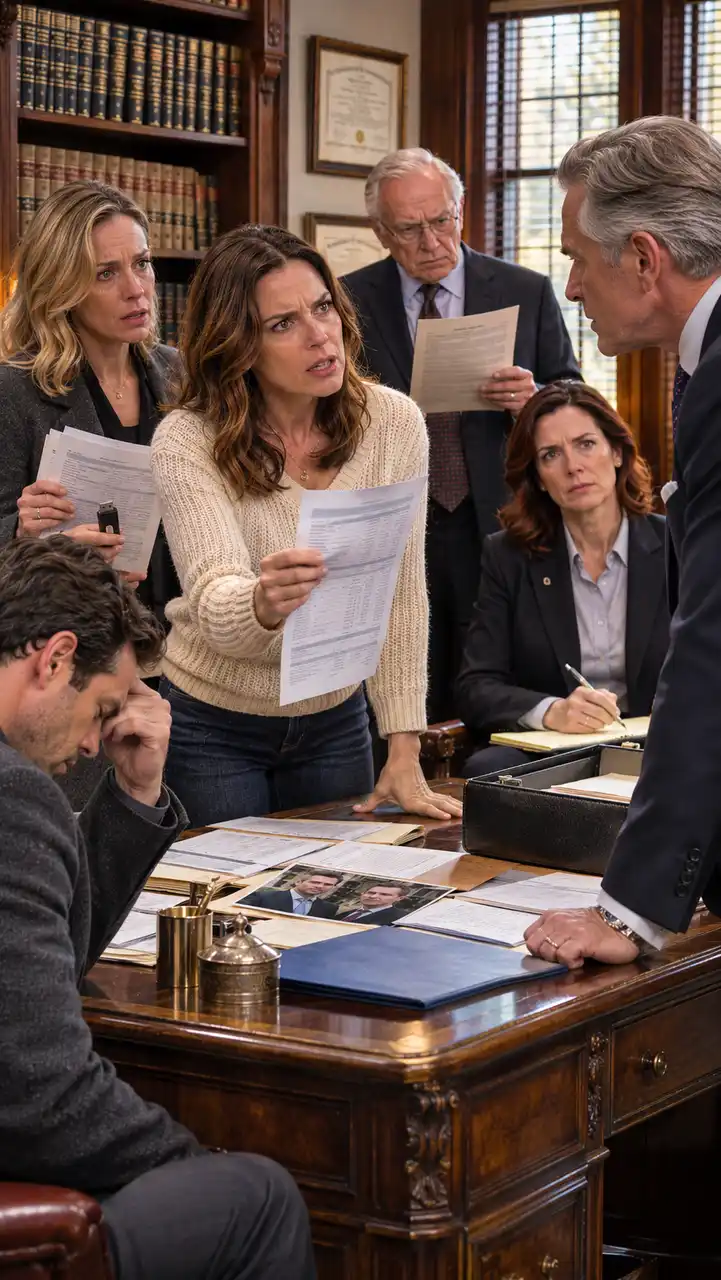
My Brother Sold Our Mother's House While She Was Still Alive — Episode 4: The Meeting That Destroyed My Brother's Last Defense — Episode 4
My brother thought he could silence everyone by claiming our father had personally given Grant Mercer control of the family's $640,000 secret account. But when Grant walked into the lawyer's office carrying a supposedly signed document, my father's attorney recognized something that made him turn pale. The signature was real, but the date wasn't. Then Vanessa revealed the emails she'd secretly recovered from Daniel's computer. For the first time, my brother had nowhere left to hide. But just...
Episode 5: The Truth About My Father's Death Destroyed Everything My Husband's Family Built — Episode 5
I went to the place where my father supposedly died expecting answers. Instead, I discovered a hidden recording, an original financial ledger, and the truth about why my husband had married me. Patricia finally confessed that she had helped my father protect my inheritance before his death. But the biggest revelation came when we played the second recording. My father's final words exposed a thirty-year financial conspiracy, and Frank Harrison's voice revealed what really happened on the nigh...
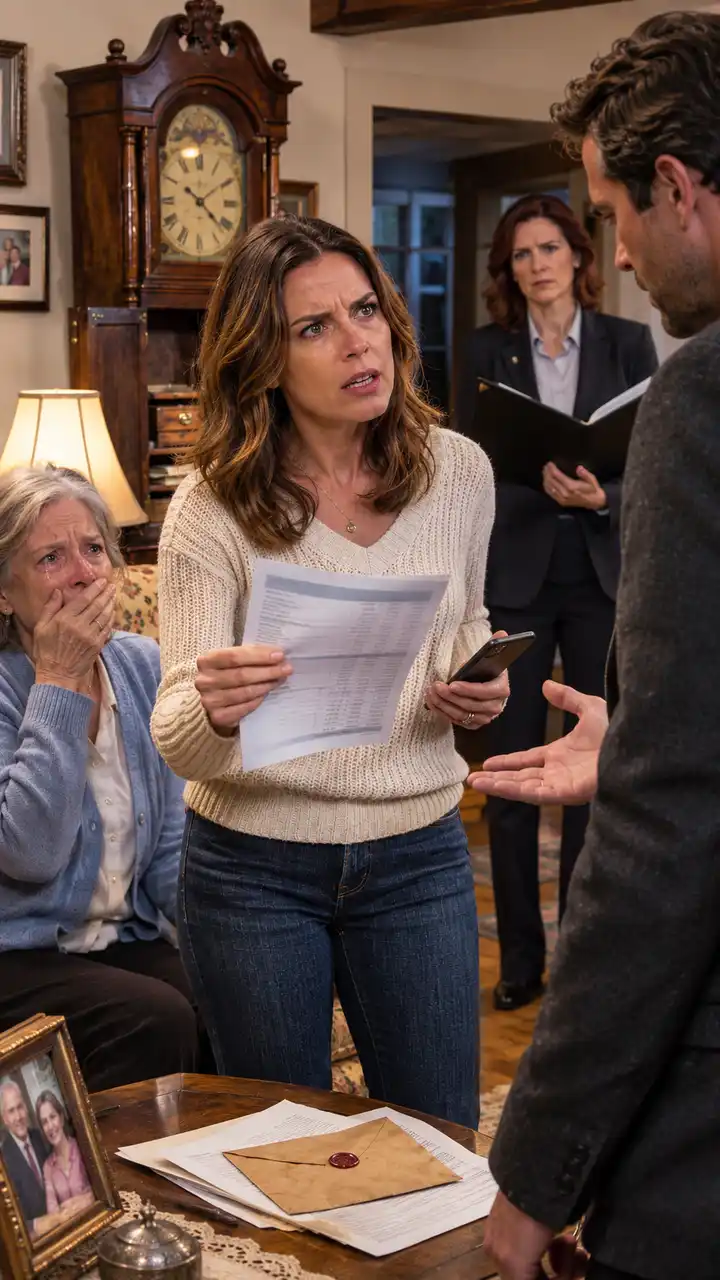
My Brother Sold Our Mother's House While She Was Still Alive — But He Didn't Know What She Had Hidden Inside the Walls | Episode 2: The Money My Father Left Behind — Episode 2
My brother walked into our mother's living room and demanded that I hand over the envelope I'd found inside our father's grandfather clock. Then he made a confession that changed everything: our father had left me money, and Daniel had spent eleven years trying to make sure I never discovered it. But the attorney standing behind him had brought something even more disturbing. The buyer had discovered a legal restriction on the property that Daniel claimed didn't exist. And when Mom finally ex...
Recommended for You
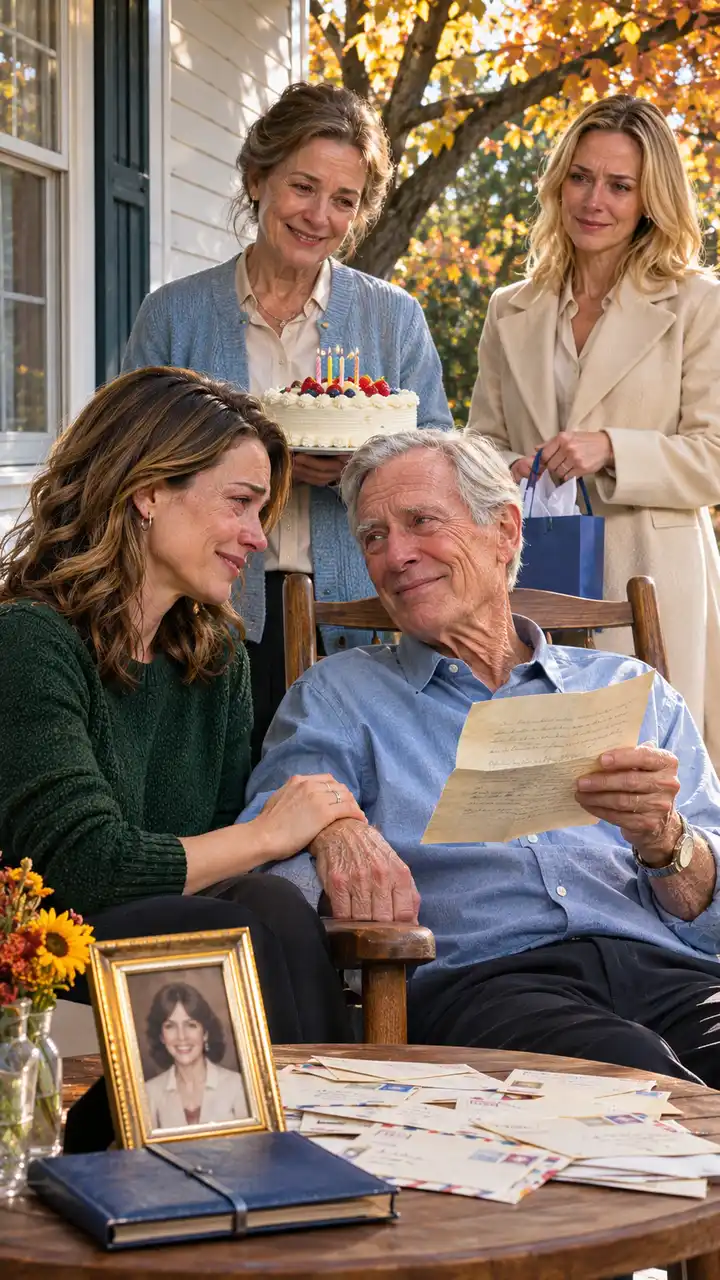
My Sister Told Everyone I Abandoned Our Father — Then I Found the 47 Letters She Never Let Him Read | Episode 5: The Truth That Finally Brought Us Home — Episode 5
My sister had spent eleven months keeping my letters from our father, but the biggest betrayal was still waiting. An amendment bearing Dad's forged signature had transferred control of our family inheritance, and my biological mother had apparently signed it too. Then we discovered Vanessa had secretly contacted Laura eleven months earlier. The two women had made an arrangement neither Dad nor I knew about. When Laura finally walked into the room, she was carrying something that changed every...
My Sister Told Everyone I Abandoned Our Father — Then I Found the 47 Letters She Never Let Him Read | Episode 4: The Promise Mom Made Me Break — Episode 4
My sister finally admitted that our biological mother had returned when I was six years old. But the truth was worse than I imagined. My mother Margaret hadn't simply rejected her younger sister. She had made a secret arrangement that kept Laura away from me for decades. Then Vanessa confessed that she had personally helped destroy Laura's attempts to contact us. I thought that was the worst betrayal. Until my attorney discovered that someone had been quietly withdrawing money from a family t...
My Sister Told Everyone I Abandoned Our Father — Then I Found the 47 Letters She Never Let Him Read | Episode 3: The Mother I Never Knew — Episode 3
I spent 42 years believing Margaret Mitchell was the woman who gave birth to me. Then an anonymous email showed me a hospital record with another woman's name. My sister Vanessa knew something about it, and my father had apparently spent his entire life protecting the secret. But the biggest shock came when I finally played the USB recording hidden beneath my father's letters. My mother's voice filled the room. What she said explained why my sister had been so desperate to keep me away. And t...
Join the discussion
No comments yet. Start the conversation.