Stories
My Sister Tried to Take Our Father's House—But Aunt Patricia Revealed Who Actually Paid for It — Episode 5
When Lauren told Dad to ask Aunt Patricia who really paid for our childhood home, I thought she was trying to distract us from her own lies. I was wrong. The following morning, Patricia arrived carrying an old bank receipt and an agreement Mom had hidden for nearly twenty years. Dad stared at the documents, then looked at his sister with tears in his eyes. "You never told me you were still paying for this family." But Patricia wasn't finished. She had one more document, and it explained why M...
Full story · Fiction
Dad called Aunt Patricia before breakfast.
He didn't tell her what Lauren had said. He simply asked whether she could come to the house because there were things about the property they needed to discuss.
She arrived forty minutes later carrying a brown leather handbag and a thick envelope.
Patricia was seventy-two, with short silver-blonde hair and the same careful way of speaking that I remembered from childhood. She hugged Dad first, then looked at me.
"I suppose you've finally found everything Margaret wanted you to find," she said.
Dad gestured toward the kitchen table.
"Patricia, why is your name on the original house agreement?"
She placed her handbag on the chair.
"Because your father and I made a promise before this house became your home."
She removed an old bank receipt.
The date was almost twenty years earlier.
The amount was $22,000.
I looked at Dad.
He nodded slowly.
"That's the money you gave us for the down payment."
Patricia nodded.
"Your mortgage application had been rejected twice. You and Margaret were about to give up on the house. I had just received money from selling my apartment, and I wanted you to have somewhere stable to raise the children."
I had never heard this story.
"You paid twenty-two thousand dollars?" I asked.
"I did. It wasn't a gift. We agreed that you would repay me when you could. But I also asked for something else."
She opened the envelope.
Inside was the original agreement signed by Dad and Mom.
It explained that Patricia's contribution was a family loan and that she would retain the right to return to live in the property if she experienced serious financial hardship or became unable to maintain independent housing.
It did not give her ownership of the house.
It did not prevent Dad from selling it.
But it did require that her documented right be respected and discussed before certain arrangements affecting her residence were made.
"Your mother insisted we put everything in writing," Patricia explained. "She didn't want anyone remembering the agreement differently twenty years later."
Dad looked embarrassed.
"I thought I'd paid you back everything."
Patricia shook her head.
"You paid back eighteen thousand over several years. I told you not to worry about the remaining four thousand when Margaret started getting sick."
Dad lowered his head.
"You should have told me."
"I wasn't asking for applause, Daniel. I was helping my family."
I looked at the agreement again.
There was a second page.
It contained a clause requiring written acknowledgment from Patricia if the family intended to remove her residence arrangement before its conditions had been resolved.
The signature line was blank.
I remembered the photocopy Paul had shown us.
The one with Patricia's signature crossed out and a new date written beside it.
"Lauren wanted you to sign a release," I said.
Patricia nodded.
"She came to my apartment three weeks ago. She said your father wanted to sell the house and that I was making things difficult by keeping an old agreement alive."
"Did she explain why?"
Patricia gave me a tired smile.
"She said the family needed a fresh start. Then she offered me four thousand dollars."
Dad looked up.
"Four thousand?"
"Exactly what you still owed me. She said I could take it and sign away my rights."
I felt my jaw tighten.
"But she didn't offer you anything else?"
"No. She wanted my signature immediately. When I asked whether you knew, she said you had already agreed to everything."
Patricia paused.
"I called Paul because something about the paperwork didn't feel right. That's when I discovered Lauren had been telling people the house was already being transferred to her."
Dad rubbed his face.
For years, Lauren had been telling people that she was the daughter who stayed close to the family.
Now we were discovering that she'd also been trying to erase the promises that made the house possible.
Patricia reached into her handbag again.
"There's something else Margaret asked me to keep."
She handed Dad a small photograph.
It showed Mom, Patricia, and Dad standing in front of the house on the day they received the keys.
Mom was holding a little cardboard box.
On the back, she'd written:
'Our home. Built with help, love, and promises we must never forget.'
Dad began to cry.
He didn't hide it.
I had seen him cry at Mom's funeral, but this was different. He was grieving a part of their marriage he hadn't fully understood.
Patricia reached across the table and held his hand.
"She never wanted you to feel indebted to me. She only wanted the agreement respected."
Then I asked the question that had been bothering me.
"Why did Mom tell Paul that Lauren knew about the money but didn't know why she'd chosen that amount?"
Patricia looked at Dad before answering.
"Because Lauren had been asking about the house and the savings account for years. Your mother believed she had begun treating family assistance as something she was entitled to receive."
She explained that Mom had discovered Lauren and Evan were under significant financial pressure during their marriage.
Mom had been willing to help them with specific expenses, but she refused to let them use Dad's retirement savings or the money she'd reserved for me.
She also refused to release Patricia's agreement.
"Margaret told me something once," Patricia continued. "She said she wasn't afraid of Lauren needing help. She was afraid of what Lauren might do when someone told her no."
Nobody spoke for several seconds.
Then Dad stood up.
"I'm calling her."
He dialed Lauren's number.
She answered quickly.
"Dad?"
"Your aunt is here."
Silence.
"Okay," Lauren finally said.
"She showed me the original agreement. She told me about the twenty-two thousand dollars."
Lauren exhaled sharply.
"I already knew about that."
Patricia looked at me.
Dad continued.
"Why did you offer her four thousand dollars to sign away her agreement?"
"Because she doesn't live here anymore!"
"That wasn't my question."
"I was trying to make things easier. You don't understand how complicated everything has become."
Dad's voice remained calm.
"I understand that you tried to transfer my house without my informed agreement. I understand that money disappeared from your mother's account. And I understand that you told relatives your brother had agreed to decisions he never made."
Lauren began crying.
"I needed somewhere to start over. I thought if I had the house, I could fix my debts and finally have something of my own."
I moved closer to the phone.
"You could have asked us for help."
"You would have said no."
"You never gave us the chance."
She was quiet.
Then she said something that hurt more than her earlier accusations.
"Mom always made me feel like I was the one who couldn't get anything right. You were the responsible one. Dad trusted you with everything. I was tired of being the daughter who needed help."
I looked at Patricia.
For the first time, I understood that Lauren's resentment wasn't entirely about money.
It had been growing for years.
But resentment didn't give her the right to deceive everyone.
Dad finally spoke.
"I love you, Lauren. But I won't let you make decisions about my house or my money anymore."
He told her that the bank was reviewing the transfers and that any disputed transactions would need to be accounted for. The property paperwork would be independently reviewed, and Patricia's original agreement would be preserved.
He also told her that if she wanted help dealing with her debts, he would discuss it with her honestly.
But there would be no more secret withdrawals, false signatures, or promises made on his behalf.
Lauren asked whether he was choosing me over her.
Dad shook his head, although she couldn't see him.
"I'm choosing to tell the truth."
The following weeks were difficult.
The bank completed its review and provided records tracing the disputed transfers to accounts used by Lauren. She acknowledged that the money had gone toward personal debts and agreed to work through a repayment arrangement with Dad rather than continue disputing what had happened.
The attempted property transfer was never completed. The attorney reviewed the documents, Dad confirmed his ownership, and the questionable authorization was revoked through the appropriate financial institutions.
Paul also acknowledged that he should have followed up more carefully when the original broad authorization remained active. Dad decided to obtain independent legal advice going forward.
Patricia's agreement was formally reviewed and preserved. She didn't want the house, and she wasn't asking Dad to repay the remaining four thousand dollars.
But Dad insisted on documenting everything properly.
He said he wouldn't allow another family misunderstanding to become another family betrayal.
Lauren didn't come around for almost a month.
When she finally visited, she didn't bring a document or ask about the house.
She brought a small box of Mom's old photographs.
She sat at the kitchen table with Dad and admitted that she had spent years believing Mom loved me more because she trusted me with responsibilities Lauren never received.
Dad listened.
He didn't tell her that everything was forgiven.
He told her they could start rebuilding their relationship if she stopped expecting forgiveness to erase accountability.
I left them alone to talk.
Before going, I placed Mom's photograph of the house beside the original agreement in a new protective folder.
Patricia came over that Sunday.
Dad made her tea, and for the first time in years, the three of us sat on the back porch without discussing bank statements, signatures, or property documents.
He handed Patricia a small envelope.
Inside was a check for the remaining four thousand dollars.
She looked at him.
"Daniel, I told you that money was forgiven."
He smiled sadly.
"I know. But I don't want our family home carrying an unpaid promise anymore."
Patricia accepted it.
Then Dad turned toward me.
"Your mother saved fifteen thousand dollars because she wanted you to have a chance to build something of your own. Don't spend your life protecting everyone else's future and forgetting yours."
I looked toward the photograph on the table.
For years, I'd believed the brass key Mom gave me meant I was responsible for keeping the house standing.
Now I understood something different.
It meant I was responsible for remembering what made it a home.
A few days later, Lauren sent me a message.
It was short.
'I'm sorry I made everyone believe you abandoned Dad. I know saying sorry doesn't fix it. I want to try again when you're ready.'
I didn't reply immediately.
Some things take longer to repair than a broken sink or a leaking roof.
But I didn't delete the message, either.
That evening, Dad placed Mom's old photograph in a frame beside the hallway table.
Underneath it, he placed the brass house key.
And for the first time since the retirement celebration, our family home felt like it belonged to the people who had actually fought to protect it.
Take a break. Sharpen your mind.
Trivia, word games, puzzles and more—fresh challenges are waiting every day.
Explore all gamesRelated Articles
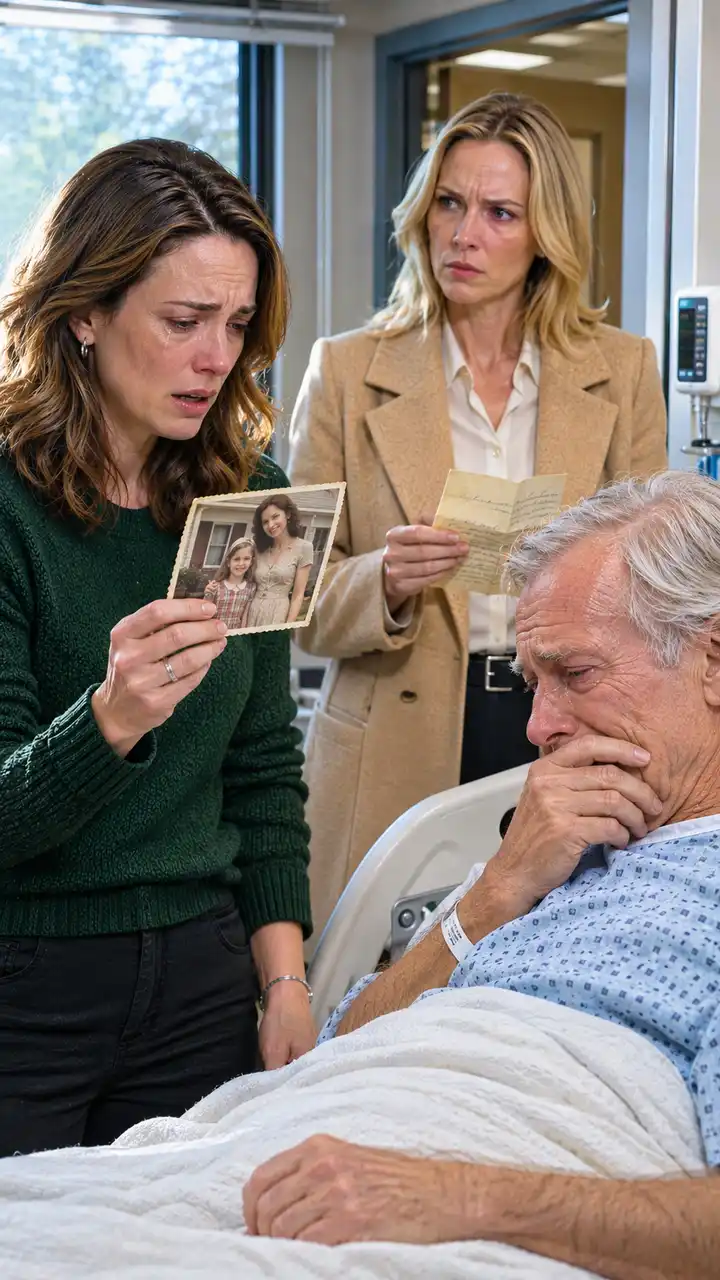
My Sister Told Everyone I Abandoned Our Father — Then I Found the 47 Letters She Never Let Him Read | Episode 3: The Mother I Never Knew — Episode 3
I spent 42 years believing Margaret Mitchell was the woman who gave birth to me. Then an anonymous email showed me a hospital record with another woman's name. My sister Vanessa knew something about it, and my father had apparently spent his entire life protecting the secret. But the biggest shock came when I finally played the USB recording hidden beneath my father's letters. My mother's voice filled the room. What she said explained why my sister had been so desperate to keep me away. And t...
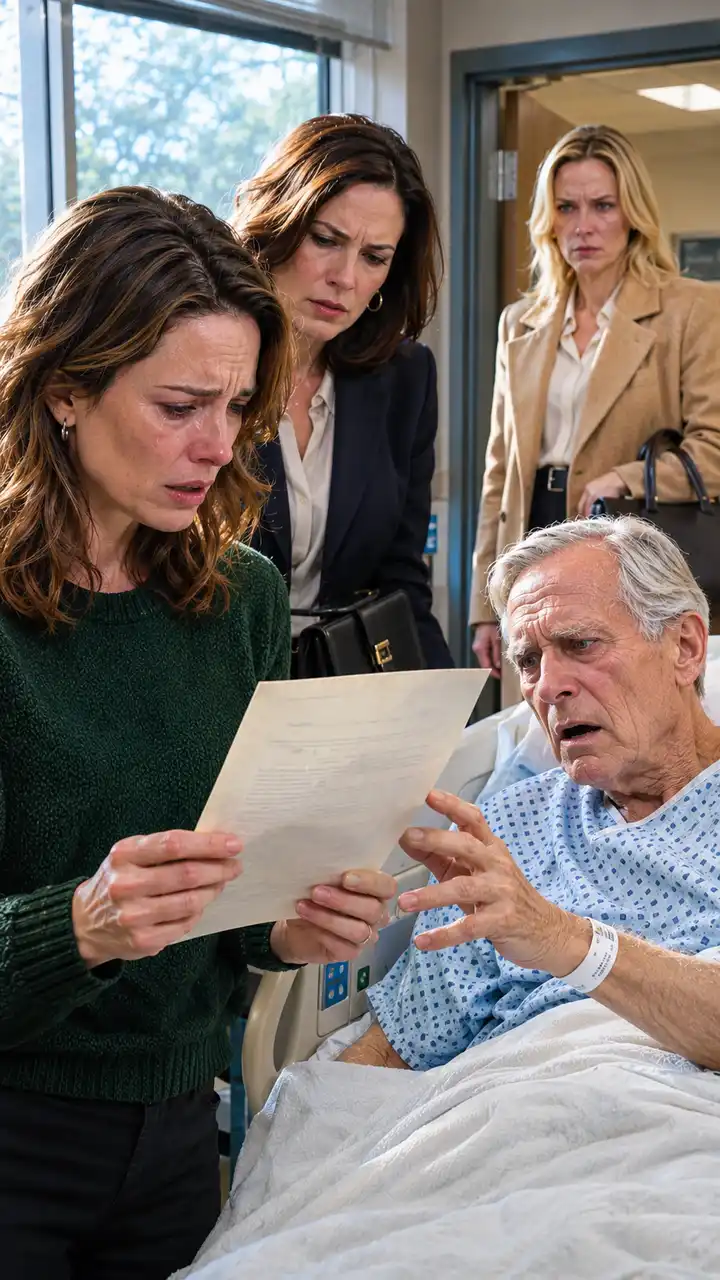
My Sister Told Everyone I Abandoned Our Father — Then I Found the 47 Letters She Never Let Him Read | Episode 4: The Promise Mom Made Me Break — Episode 4
My sister finally admitted that our biological mother had returned when I was six years old. But the truth was worse than I imagined. My mother Margaret hadn't simply rejected her younger sister. She had made a secret arrangement that kept Laura away from me for decades. Then Vanessa confessed that she had personally helped destroy Laura's attempts to contact us. I thought that was the worst betrayal. Until my attorney discovered that someone had been quietly withdrawing money from a family t...
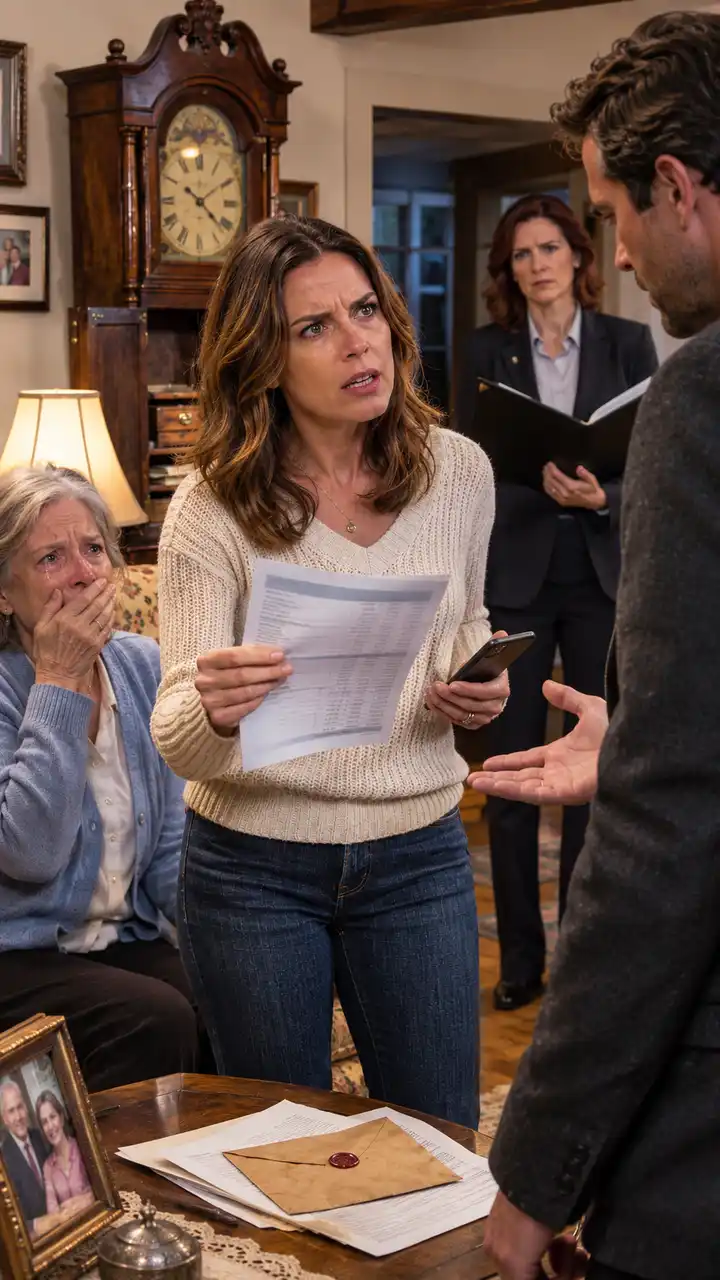
My Brother Sold Our Mother's House While She Was Still Alive — But He Didn't Know What She Had Hidden Inside the Walls | Episode 2: The Money My Father Left Behind — Episode 2
My brother walked into our mother's living room and demanded that I hand over the envelope I'd found inside our father's grandfather clock. Then he made a confession that changed everything: our father had left me money, and Daniel had spent eleven years trying to make sure I never discovered it. But the attorney standing behind him had brought something even more disturbing. The buyer had discovered a legal restriction on the property that Daniel claimed didn't exist. And when Mom finally ex...
Recommended for You
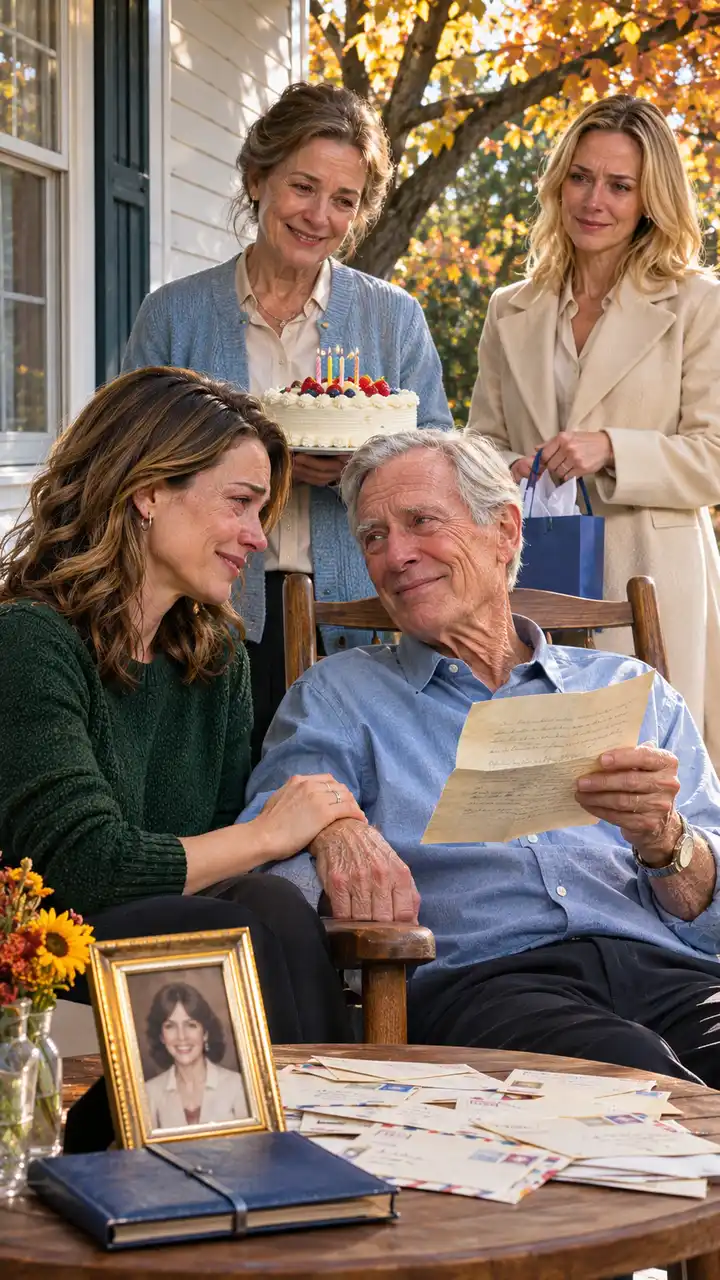
My Sister Told Everyone I Abandoned Our Father — Then I Found the 47 Letters She Never Let Him Read | Episode 5: The Truth That Finally Brought Us Home — Episode 5
My sister had spent eleven months keeping my letters from our father, but the biggest betrayal was still waiting. An amendment bearing Dad's forged signature had transferred control of our family inheritance, and my biological mother had apparently signed it too. Then we discovered Vanessa had secretly contacted Laura eleven months earlier. The two women had made an arrangement neither Dad nor I knew about. When Laura finally walked into the room, she was carrying something that changed every...
My Sister Told Everyone I Abandoned Our Father — Then I Found the 47 Letters She Never Let Him Read | Episode 2: The Locked Drawer — Episode 2
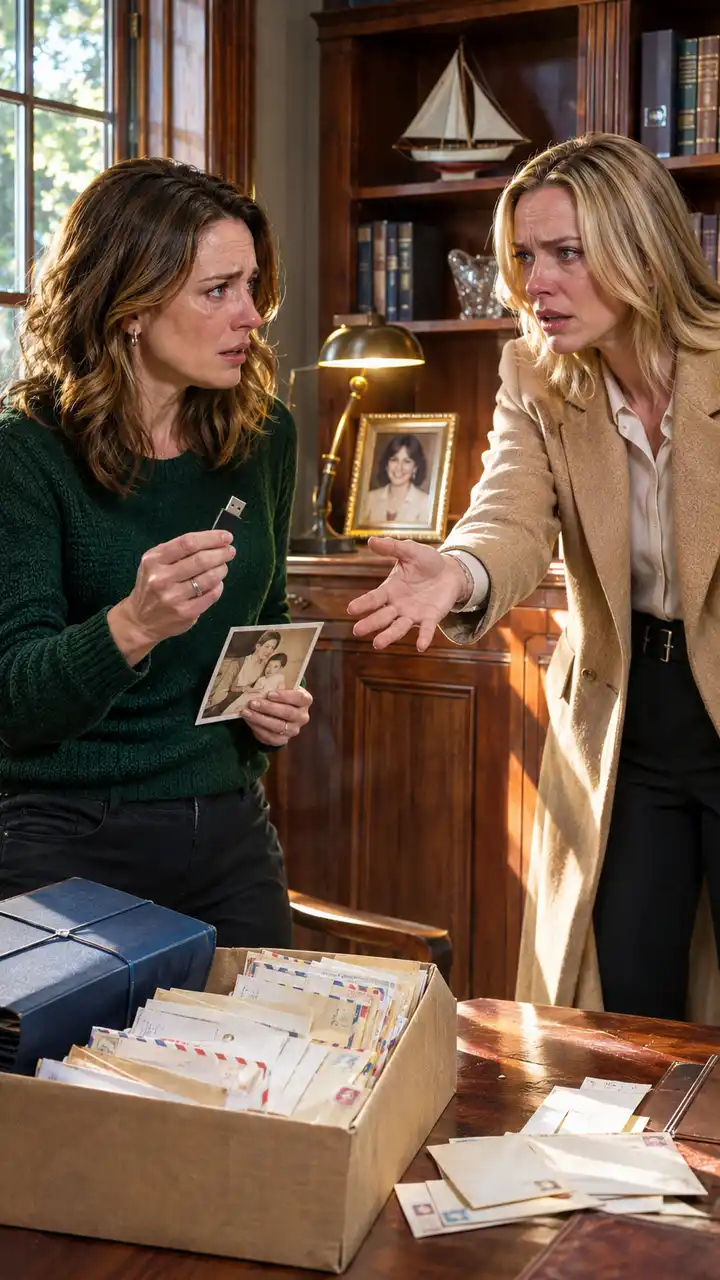
My father gave me a brass key and told me to open the locked drawer in his study. My sister practically begged me not to. The next morning, I drove to our childhood home, expecting to find old photographs or family documents. Instead, I found 47 letters, every one written by me, every one still sealed. Some were birthday cards. Others contained photographs of my children my father had never seen. But beneath the letters was something far more disturbing: a document bearing my father's signatu...
My Sister Told Everyone I Abandoned Our Father — Then I Found the 47 Letters She Never Let Him Read — Episode 1
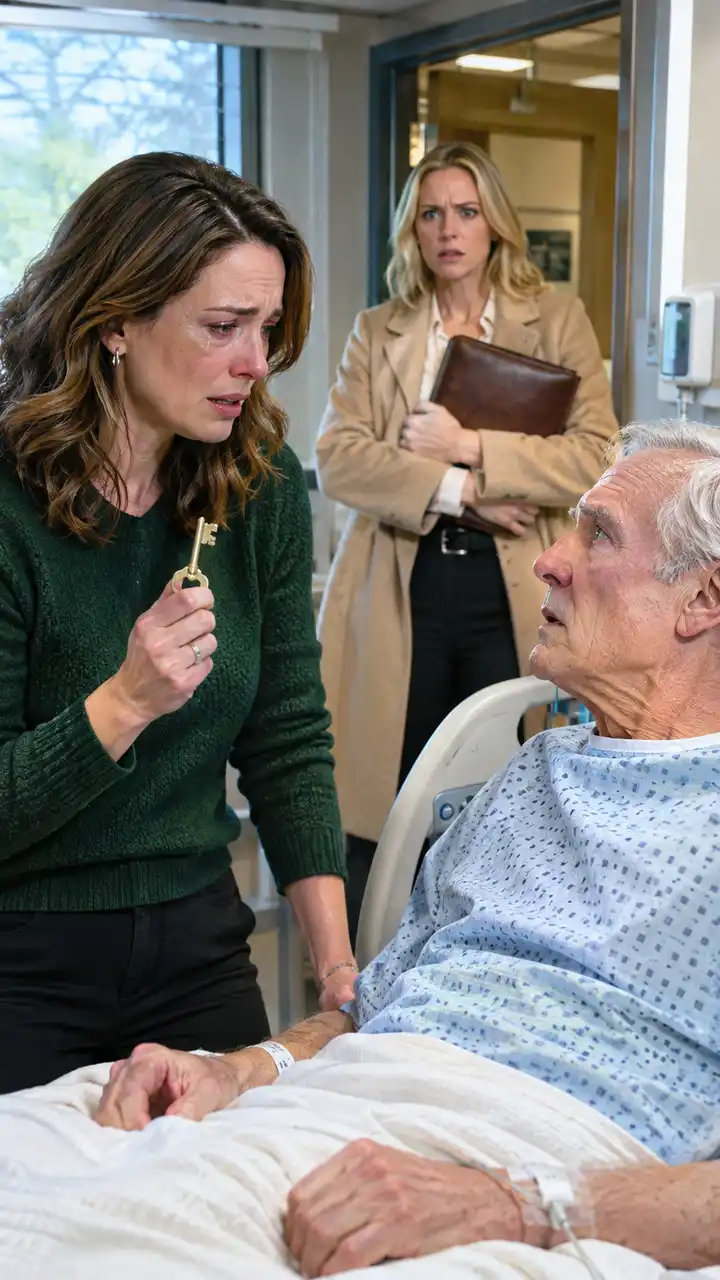
My sister stood beside our father's hospital bed and told everyone I hadn't visited him in eleven months. She even showed our relatives a calendar proving I had forgotten his birthday, Thanksgiving, and Christmas. My father looked at me with tears in his eyes and whispered, "I thought you didn't love me anymore." I couldn't explain myself because I had no idea what she was talking about. Then a nurse handed me a dusty cardboard box she'd found in my father's locked desk. Inside were 47 unopen...
Join the discussion
No comments yet. Start the conversation.