Long Reads
Fashion startup Atorie raises $9.5M to bring consumers luxury goods without the markup | TechCrunch

Shoppers can visit the Atorie website and buy handbags or clothes made from the same material — and coming from the same factory — that manufacturers use in high-end goods.
Fashion startup Atorie announced Thursday a $9.5 million seed round with investors, including a16z speedrun, Night Capital, and Lightspeed Ventures’ Jeremy Liew.
The company says shoppers can visit the Atorie website and buy handbags or clothes made from the same materials — and in the same factories — that high-end manufacturers use. The items are reasonably priced, too, with an Italian leather handbag costing just a few hundred dollars, compared to the thousands a brand like Prada or Louis Vuitton would sell it for.
The startup arrives at a time when dupe culture has become increasingly popular, while the luxury sector has faced backlash from consumers in the post-pandemic era due to swift price hikes.
As a result, young consumers especially have sought cheaper, near-identical replications of these high-end goods; doing so has become almost a status symbol itself.
On Atorie, the items sold are mostly not dupes, says co-founder and serial entrepreneur Redouane Ramdani.
“It’s the same material, same craftsmanship,” he said. “It’s coming from the same factories.” He doesn’t consider Atorie fast fashion either. “It’s slow,” he clarified.
Before Atorie, Ramdani built the creator platform Snipfeed, which was acquired in 2024. Having grown up in France with a family that worked in luxury manufacturing, the founder always had an idea in the back of his mind that he would one day do something in the industry he grew up loving as a kid.
By the time he sold Snipfeed, however, the luxury manufacturing industry was quite different.
The biggest shift he noticed was that luxury factories were no longer just manufacturing goods. Traditionally, a brand like Ralph Lauren would bring its own designs and materials to a factory, which would then produce them. The problem was that brands had to commit to large minimum orders, which often pushed them to overproduce inventory. At the same time, a lot of these factories depend on working with a small number of large brand customers. If a brand pulled out at the last minute or not enough of that overproduced inventory sold, the factories faced financial and inventory risk.
“What’s changing is that the best factories increasingly have their own design and product-development capabilities,” Ramdani told TechCrunch. “Instead of simply manufacturing someone else’s designs, they can develop products themselves, adapt them quickly, and produce in smaller batches.”
AI also helps these factories by pulling data that helps them identify which products are likely to sell out before committing to large production runs.
“That reduces overproduction and allows factories to diversify beyond a handful of large customers,” he said.
These changes also gave Ramdani an idea, leading him to team up with Luis Angulo to launch the startup, which is now an AI-powered fashion brand that connects luxury manufacturers directly with consumers.
He compared his company’s approach to the retailer Quince, which is known for selling high-quality, low-priced items.
“We are talking to a different generation who is coming back for things that are trendy but well-made,” he continued, adding that consumers are getting tired of pure fast fashion, especially because of the harmful impact it’s having on the environment.
AI, of course, is used. Ramdani sees AI agents changing the entire shopping experience, where, in the future, people just instruct AI agents to buy things for them.
Ramdani said the company uses AI to analyze fashion trends and test what colors might look good on a product. It also uses AI agents to estimate consumer demand and trains the agents to predict when a material might start running short so factories can stock up in time.
On the consumer side, the Atorie website offers an AI agent that can build an outfit based on whatever — or whoever — inspires the customer. Over time, Atorie uses AI to learn shoppers’ habits to suggest what to buy next.
Ramdani said Atorie is already seeing an increase in sale referrals from platforms like ChatGPT and Claude.
The company said its goal is to become an alternative to Zara and offer something “very high quality for a price point that’s very affordable.” The company ended last year with around $5 million in sales and is expected to reach an annualized run rate north of $55 million this year.
“We are growing super fast,” Ramdani said, adding that the team is working with over 40 factories across the world right now.
The fresh capital will fund logistics, build more AI tools, and support production. The company also plans to release its own in-house line, like Amazon Essentials, and will work with creators and influencers to help them launch their own clothing lines quickly.

Take a break. Sharpen your mind.
Trivia, word games, puzzles and more—fresh challenges are waiting every day.
Explore all gamesRelated Articles

My Mother Ran Away to Protect Me—Then I Learned What My Father Planned for My Husband
The second paragraph of my biological mother’s letter said: Robert was going to take Daniel away. And Thomas helped him prepare the papers. I stopped reading. My father was still on speakerphone. “Dad.” Silence.
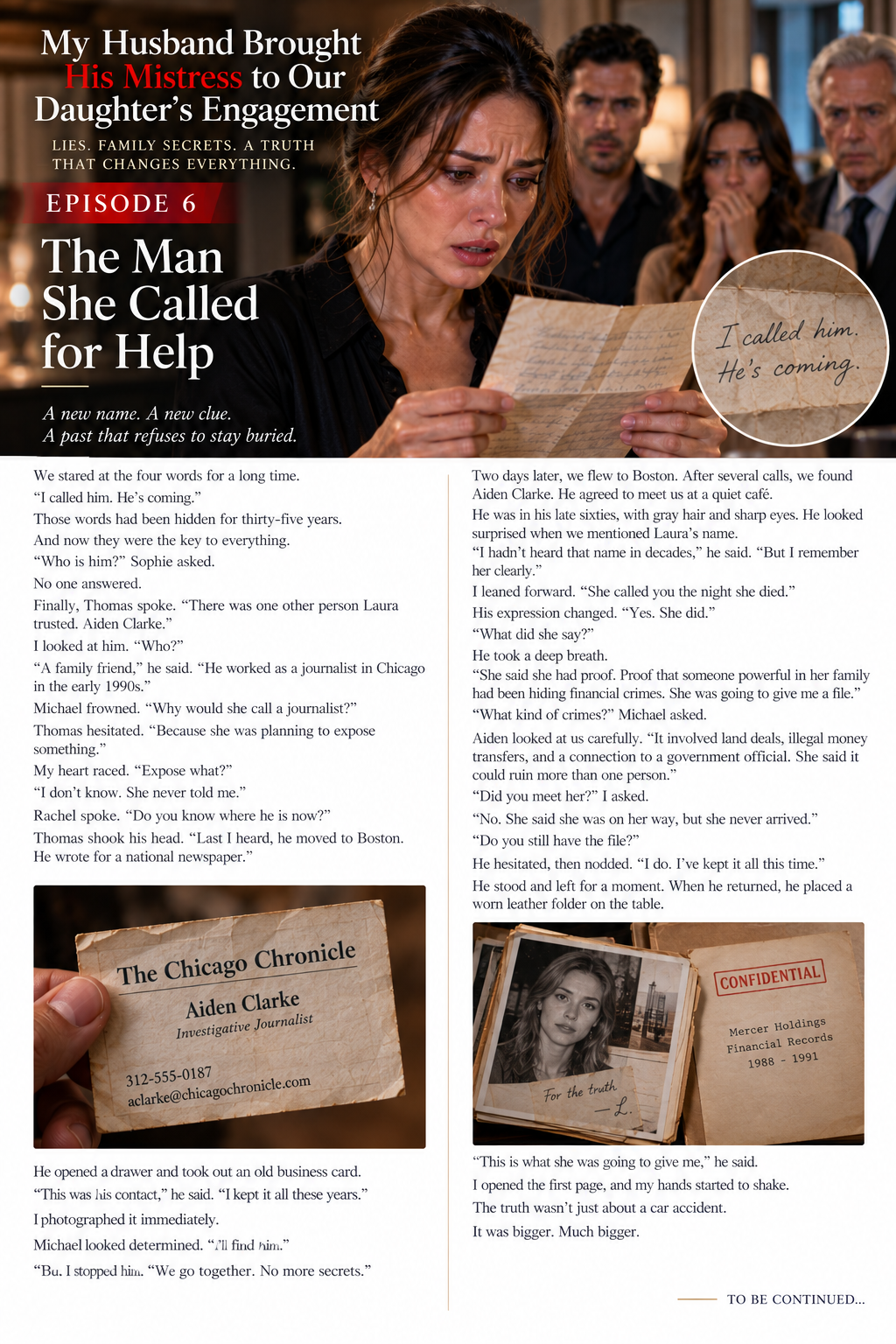
Episode 6 — The Man Laura Called for Help
We stared at the four words hidden beneath the fold of Laura’s final letter. I called him. He’s coming. Nobody spoke. Thirty-five years of lies had brought us to an unnamed man. A man Laura trusted enough to call after midnight. A man who might have known she was at the bus station. And possibly the last person to see her alive. Sophie finally broke the silence. “Who is him?” Thomas looked down. Diane watched her husband. Arthur looked terrified. Michael was staring at the handwritin
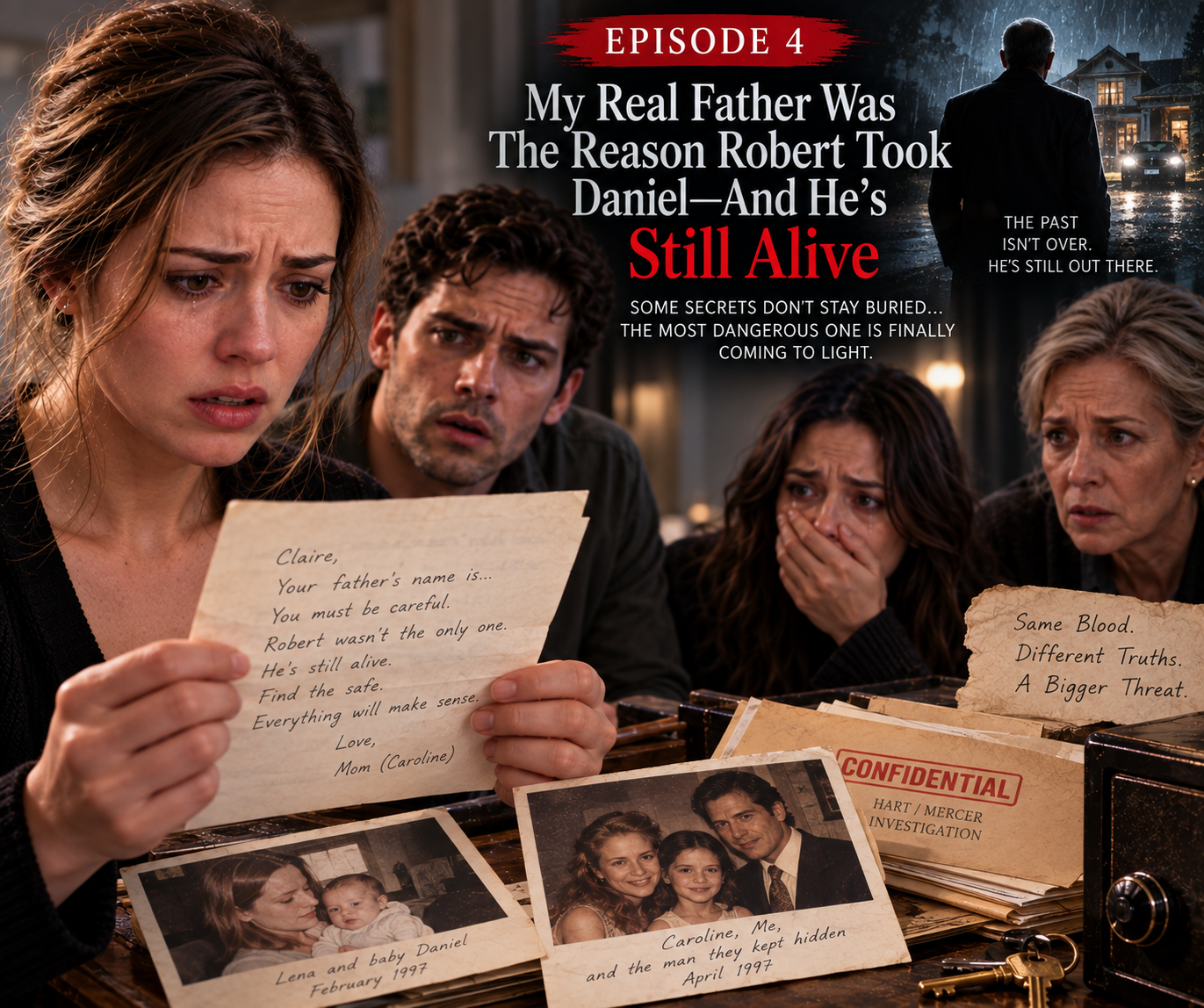
My Real Father Was the Reason Robert Took Daniel—And He’s Still Alive
Three seconds after Lena’s voicemail ended, Anna said, “I know who Claire’s father is.” Everyone turned toward her. I felt Daniel’s hand tighten around mine. “What did you say?” Anna didn’t look at me. She looked at Marianne. And Marianne suddenly looked terrified. “You promised me,” Marianne whispered. Anna shook her head. “No more promises.” I stepped between them. “You both know?” Marianne closed her eyes.
Recommended for You
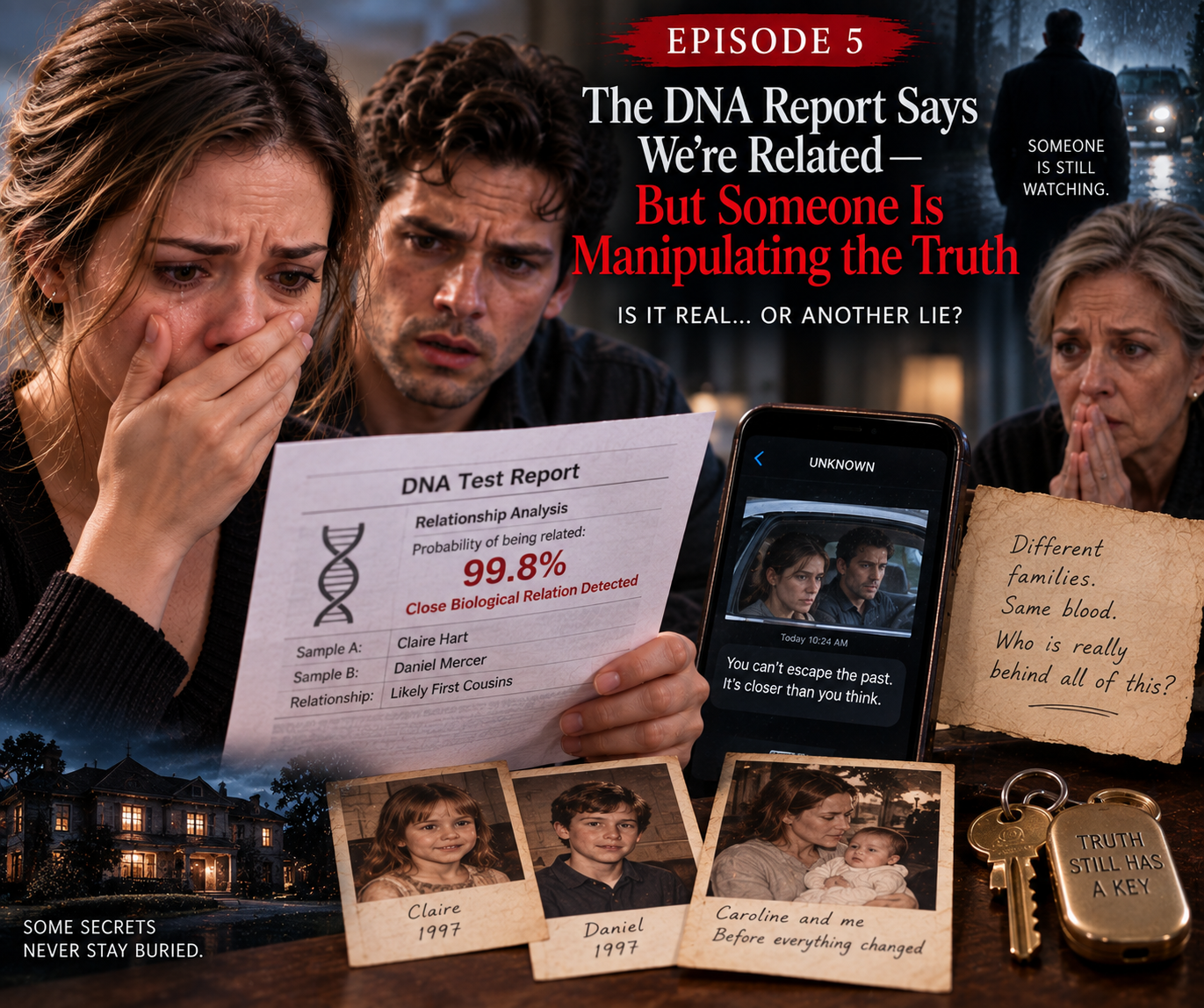
The DNA Report Said My Husband and I Were Related—Then I Saw Where the Samples Came From
“The report says we’re related.” Daniel’s words stayed in my ear. I was still standing beside Lena at the bus station. “How related?” He didn’t answer. “Daniel.” “First cousins.” My stomach turned. Lena grabbed my arm. “That’s impossible.” Daniel heard her. “Apparently not.” “Read the laboratory name,” Lena said.
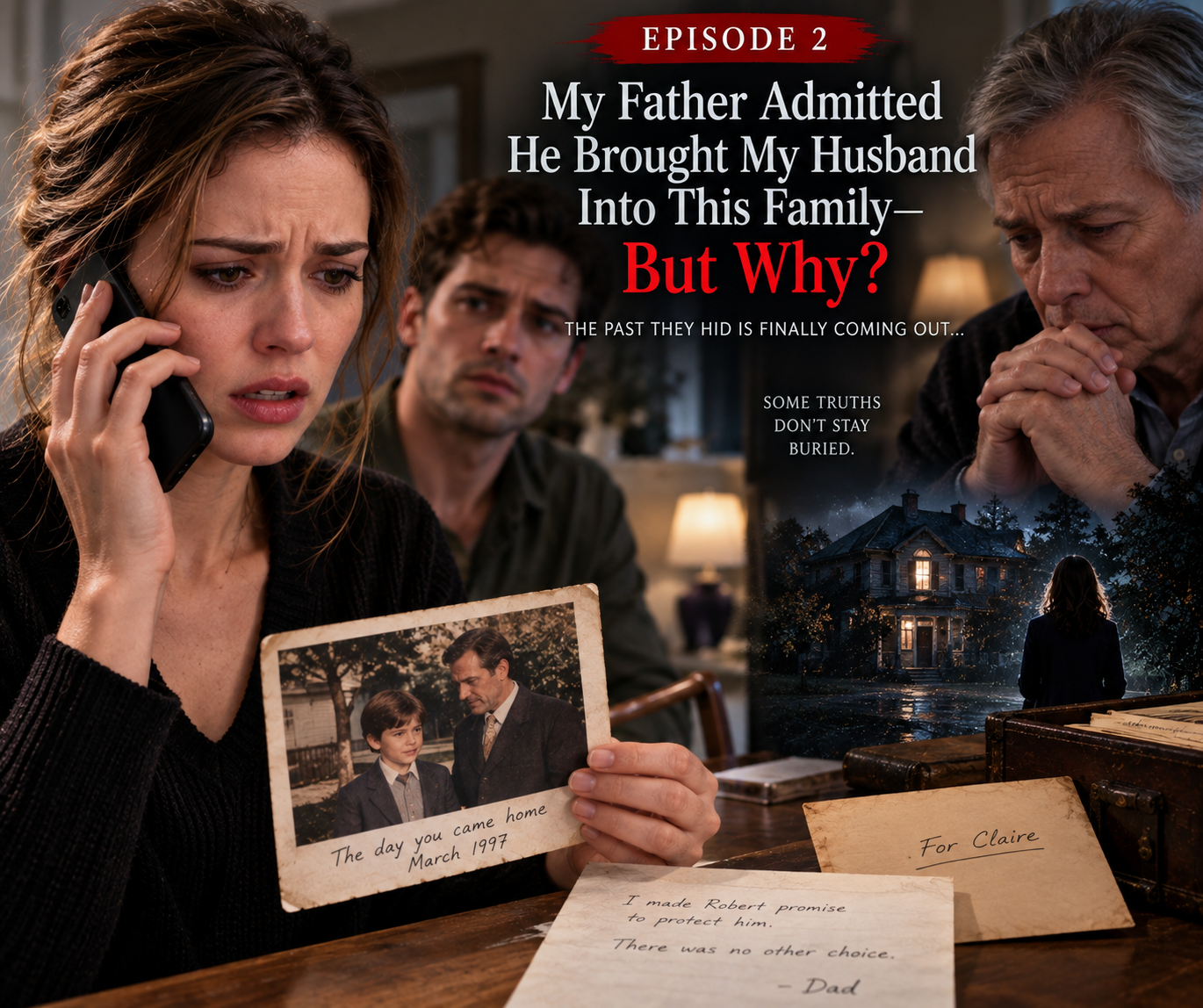
My Father Admitted He Brought My Husband Into This Family—But Why?
My father called back eleven minutes later and said, “Claire, before I tell you anything, get Daniel out of that house.” I looked across the dusty bedroom. Daniel was still holding the hospital bracelet with his biological mother’s name on it. “Why?” “Because you’re not alone.” Every hair on my arms lifted. I turned toward the hallway. Nothing. “Dad, what are you talking about?” “The house.” “What about it?” “There’s someone else there.” Daniel heard him. He walked toward me. “Put
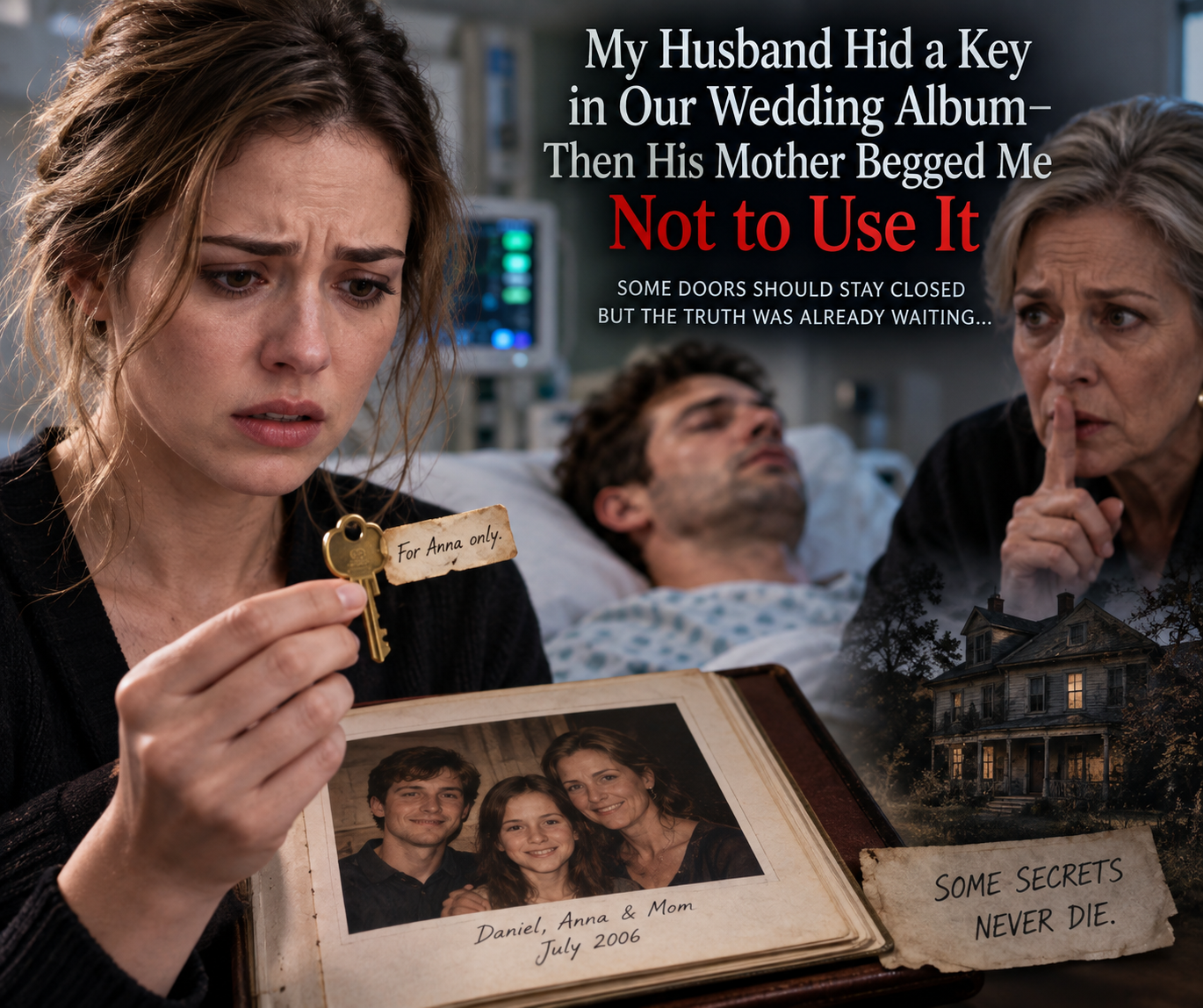
My Husband hide a key in our wedding album then his mother begged me not to use
My husband was unconscious in the emergency room when his mother grabbed my wrist and whispered, “Whatever you find in his wallet, don’t go to that house.” I stared at her. “What house?” Her face changed immediately. “I shouldn’t have said anything.” That was when the nurse returned Daniel’s belongings to me. His phone. His watch. His wedding ring.
Join the discussion
No comments yet. Start the conversation.