Long Reads
The robot NASA hired to lift a orbital telescope tumbled out of control | TechCrunch

According to NASA, two of the three reaction wheels that control the spacecraft's alignment have failed, and there are problems with one of the spacecraft's thruster systems.
A Katalyst Space robot that was launched to grab on to a space telescope and raise it to a higher orbit tumbled out of control after a series of failures, NASA and the company said today.
The company is trying to stabilize the spacecraft using back-up systems, before NASA will decide if the mission can continue.
This is the first time the space agency has hired a private company to lift one of its space telescopes to a higher orbit, allowing the observatory to continue operations beyond its expected lifespan.
The Neil Gehrels Swift Observatory was launched in 2004, with the ability to swiftly point at ephemeral space events like gamma ray bursts. The spacecraft has been pulled back toward Earth and needs to be pushed back up to a higher orbit to continue doing its job.
The LINK spacecraft was launched into space on July 3 on board a Northrop Grumman Pegasus rocket. Over the past several weeks, flight controllers have worked to commission the spacecraft, activating its various systems before it heads off to rendezvous with Swift.
However, the spacecraft suffered issues controlling itself and began spinning over the weekend. According to NASA, the spinning has resulted in “sporadic communications” with the satellite, likely because its antenna flips away from the planet. Two of the three reaction wheels that control the spacecraft’s alignment have failed, and there are problems with one of the spacecraft’s thruster systems.
Flight controllers are working to recover the spacecraft using another set of thrusters on the spacecraft to slow the spin, and they said in a statement that “we have already begun this series of burns and are seeing the intended effect.” Katalyst told TechCrunch that “this remains an active mission, and we continue to move forward with plans to rendezvous with Swift.”
Katalyst’s Kieran Wilson, the principal investigator for the mission, told reporters ahead of the mission that the spacecraft had been built incredibly quickly because of the urgent need to raise Swift in the next few months.“All this is challenging and risky,” he said at the time. “There’re a lot of spacecraft that have had far longer development cycles with far more funding behind them that have failed for mundane reasons.”
Katalyst raised a $12 million round in June to help support this mission, backed by investors Fortitude Ventures and Geodesic Capital. The company has also won funding from the U.S. military, which is interested in a dynamic vehicle that can service satellites or surveil rival spacecraft.
This story has been updated to include comment from Katalyst.
Take a break. Sharpen your mind.
Trivia, word games, puzzles and more—fresh challenges are waiting every day.
Explore all gamesRelated Articles
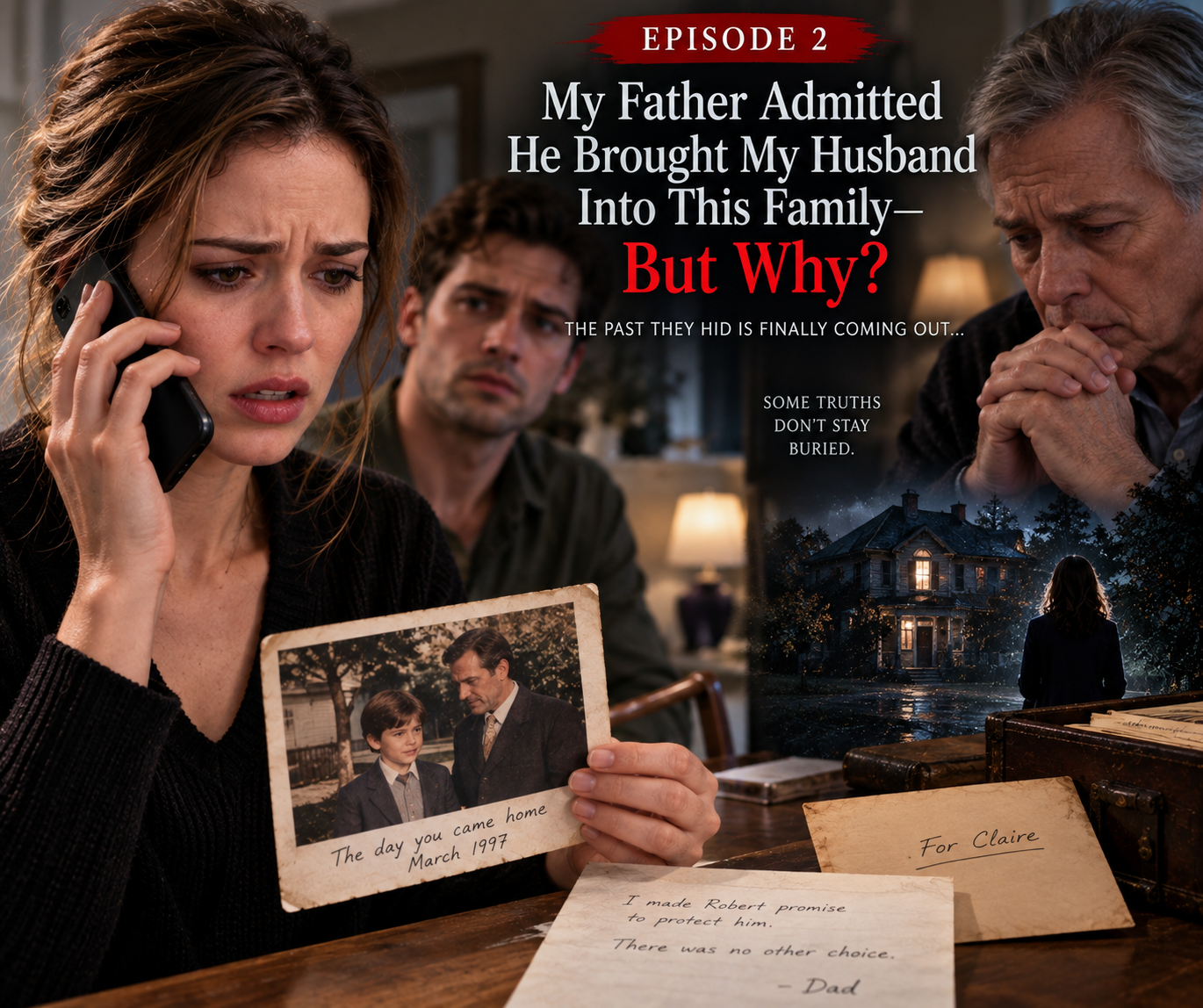
My Father Admitted He Brought My Husband Into This Family—But Why?
My father called back eleven minutes later and said, “Claire, before I tell you anything, get Daniel out of that house.” I looked across the dusty bedroom. Daniel was still holding the hospital bracelet with his biological mother’s name on it. “Why?” “Because you’re not alone.” Every hair on my arms lifted. I turned toward the hallway. Nothing. “Dad, what are you talking about?” “The house.” “What about it?” “There’s someone else there.” Daniel heard him. He walked toward me. “Put
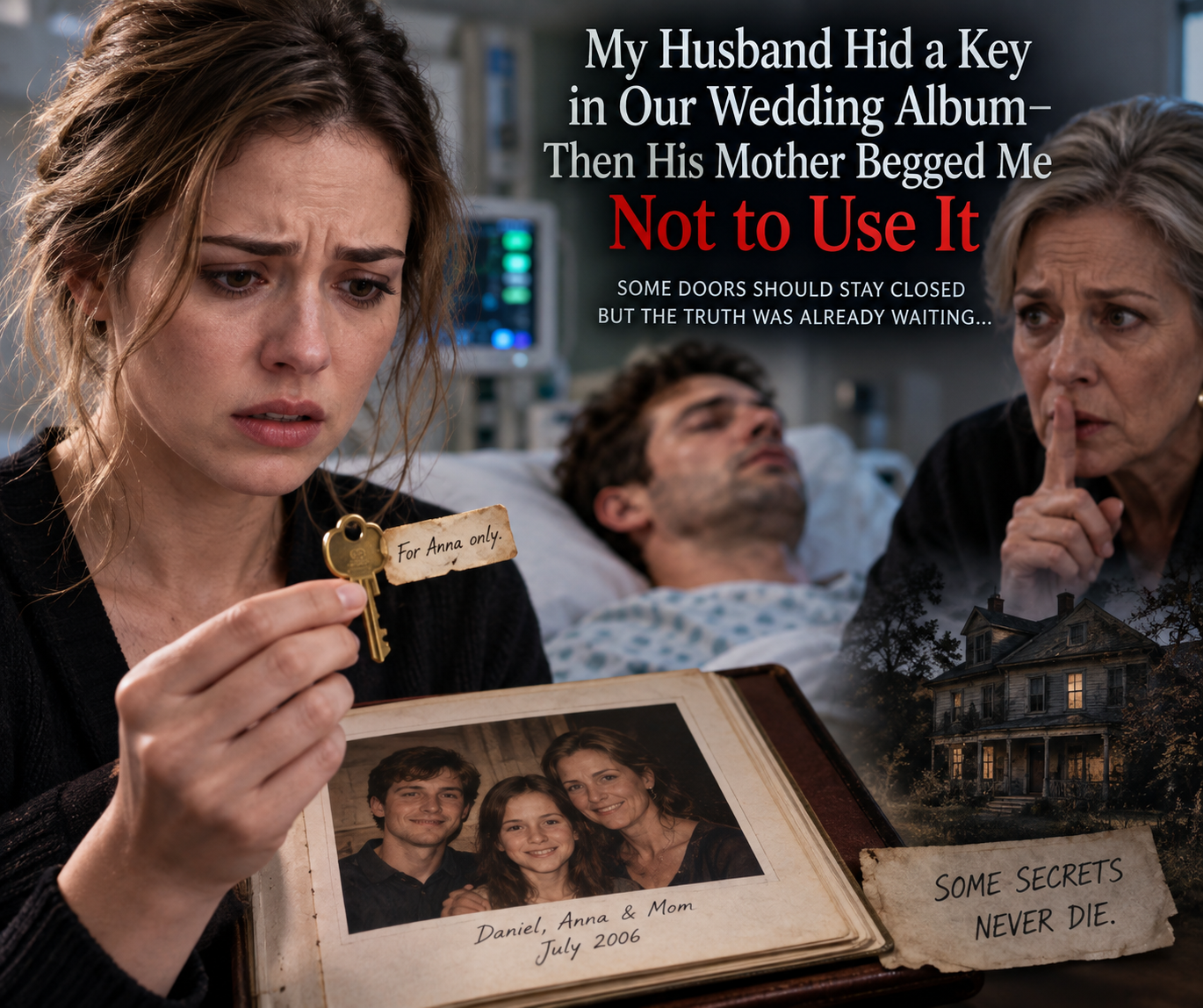
My Husband hide a key in our wedding album then his mother begged me not to use
My husband was unconscious in the emergency room when his mother grabbed my wrist and whispered, “Whatever you find in his wallet, don’t go to that house.” I stared at her. “What house?” Her face changed immediately. “I shouldn’t have said anything.” That was when the nurse returned Daniel’s belongings to me. His phone. His watch. His wedding ring.
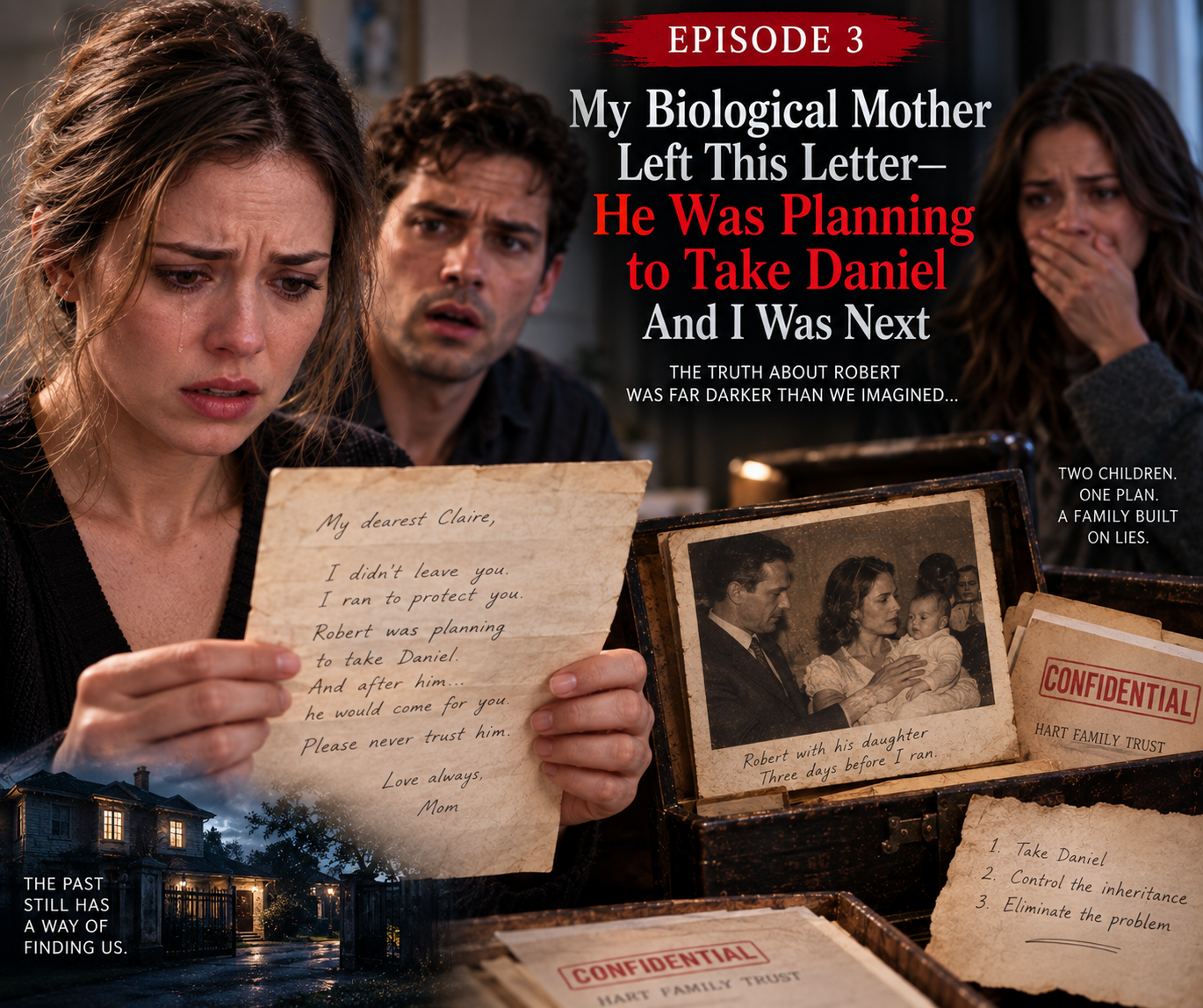
My Mother Ran Away to Protect Me—Then I Learned What My Father Planned for My Husband
The second paragraph of my biological mother’s letter said: Robert was going to take Daniel away. And Thomas helped him prepare the papers. I stopped reading. My father was still on speakerphone. “Dad.” Silence.
Recommended for You
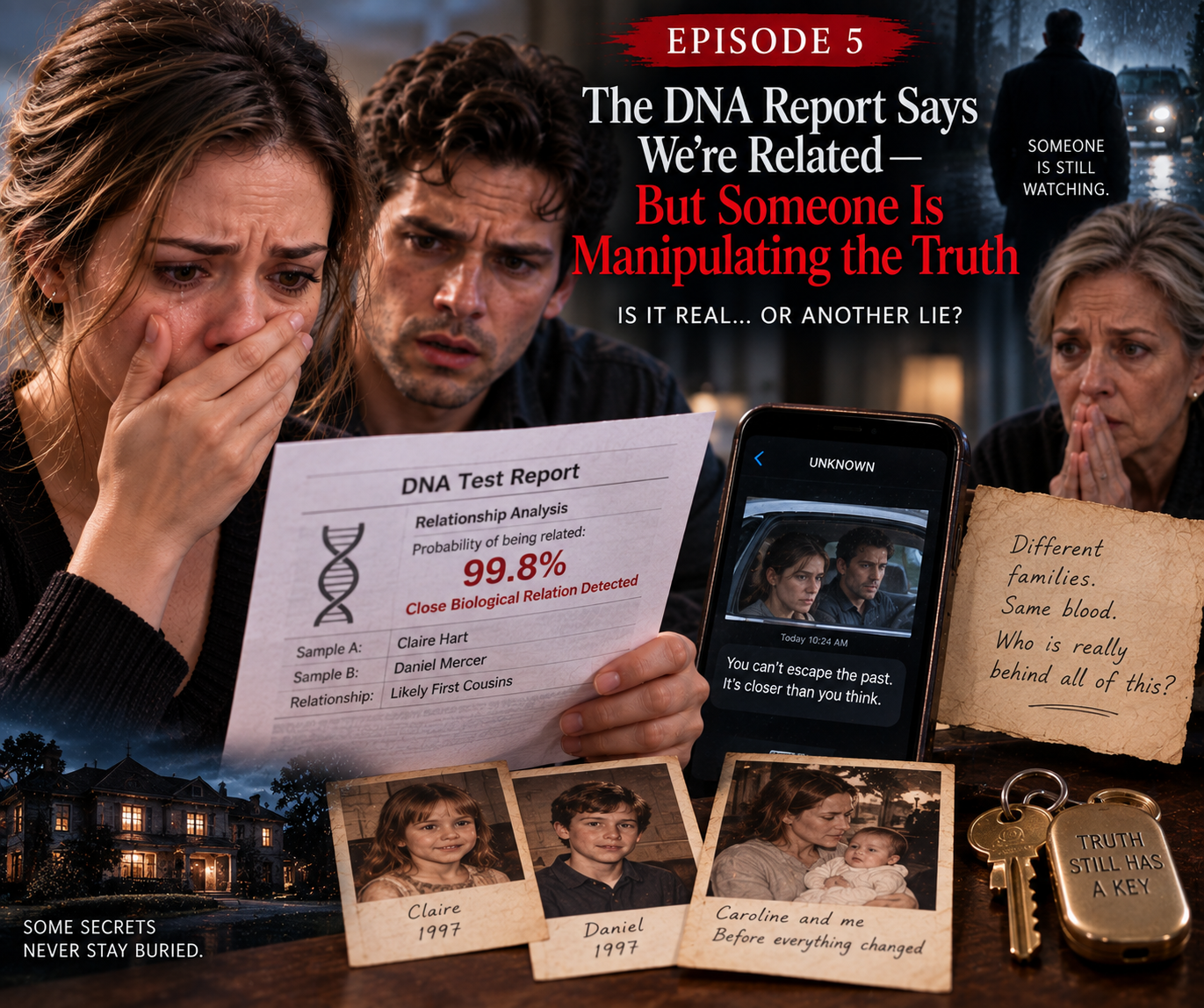
The DNA Report Said My Husband and I Were Related—Then I Saw Where the Samples Came From
“The report says we’re related.” Daniel’s words stayed in my ear. I was still standing beside Lena at the bus station. “How related?” He didn’t answer. “Daniel.” “First cousins.” My stomach turned. Lena grabbed my arm. “That’s impossible.” Daniel heard her. “Apparently not.” “Read the laboratory name,” Lena said.
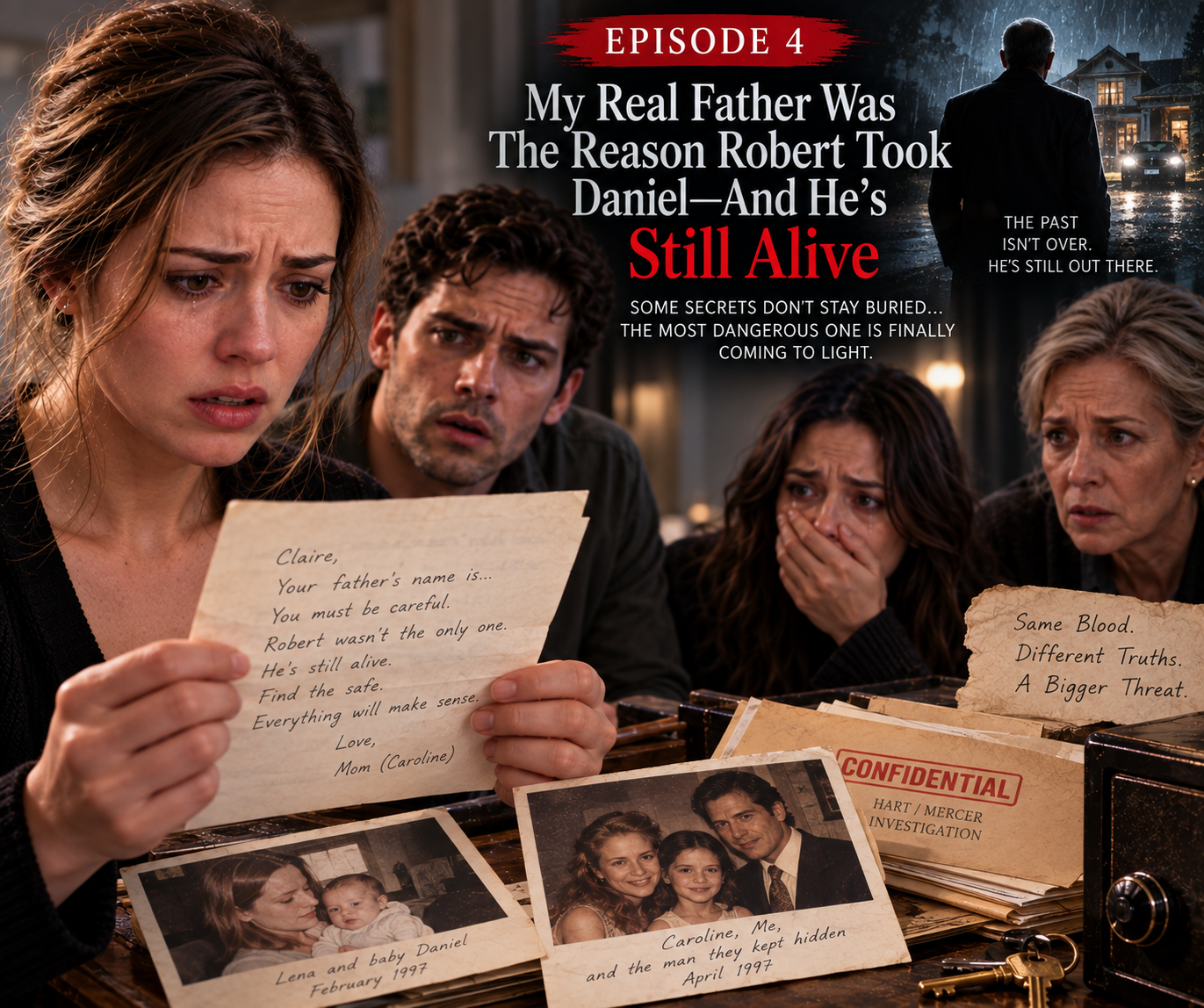
My Real Father Was the Reason Robert Took Daniel—And He’s Still Alive
Three seconds after Lena’s voicemail ended, Anna said, “I know who Claire’s father is.” Everyone turned toward her. I felt Daniel’s hand tighten around mine. “What did you say?” Anna didn’t look at me. She looked at Marianne. And Marianne suddenly looked terrified. “You promised me,” Marianne whispered. Anna shook her head. “No more promises.” I stepped between them. “You both know?” Marianne closed her eyes.
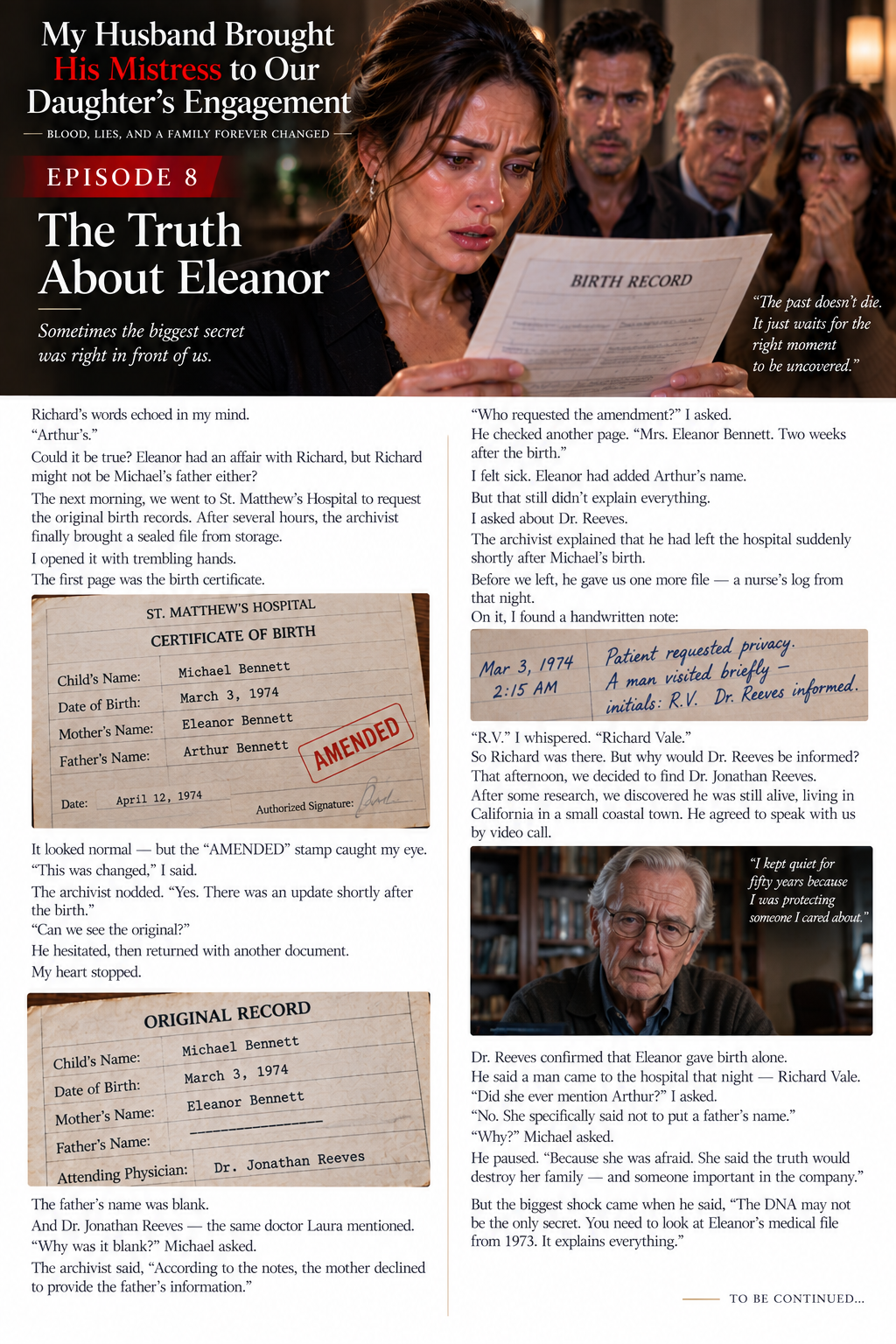
Episode 8 — The Last Secret Eleanor Took to Her Grave
Richard had just told Michael that Arthur’s name had been removed from an old hospital record. For several seconds, Michael said nothing. Then he asked the only question that mattered. “Are you my father or not?” Richard looked away. “I told you. I believed I was.” “That isn’t an answer.” “It’s the only one I have.” Michael stood so quickly his chair scraped across the floor. “You let me come here thinking you knew.” “I thought I did.” “For forty-nine years?” Richard lowered his eyes
Join the discussion
No comments yet. Start the conversation.