Long Reads
Why living downstream from a glacier has become a deadly liability | CNN

Living in the shadow of the world’s ice-capped mountains has always carried risks, but the devastating flood wave on the Nepal-China border this week is an alarm for the millions who live near these peaks
Living in the shadow of the world’s spectacular, ice-capped mountains has always carried dangers, but the devastating flood wave that carved a path of destruction on the Nepal-China border this week shows how life for the millions worldwide who live downstream of these peaks is becoming more unpredictable and more deadly.
It’s too soon to know what role climate change may have played in the catastrophic flooding, but what is clear is that mountains are changing fast as temperatures rise, melting glaciers and destabilizing slopes leading to complex, cascading disasters.
Nepal is a country of jagged, towering peaks with sheer slopes sweeping down to narrow valleys, cut through by powerful rivers. Its stunning landscape attracts hordes of tourists; it’s also treacherous.
Nestled in the rapidly warming Himalayas, the country has long been a hotspot for flooding and landslides. But what happened on Wednesday “was of significantly larger scale than what we have seen in the recent past,’ said Prashant Baral, a cryosphere analyst at ICIMOD, a Nepali climate organization.
An enormous chunk of glacier around 2,000 feet wide sheared off Langtang Lirung mountain in northern Nepal, accompanied by landslide, according to satellite analysis. It sent a deadly mix of ice, water, rock, sediment and boulders the size of cars crashing 7,000 feet downward, causing such a powerful tremor, it was initially mistaken for an earthquake.
This torrent of pulverized ice, water, rock, silt and sand — described by some as “liquid concrete” — surged through narrow gorges, wiping out homes, buildings, power plants, bridges and roads. Hundreds have died; many hundreds more are missing.
In pictures: Deadly flooding wipes out villages on the China-Nepal border
This event was remarkable in its ferocity, and it will take time to unravel the exact causes, but this kind of deadly flooding is precisely what scientists have warned would happen more frequently as humans heat the planet by burning fossil fuels.
“Whether this particular event can be tied to climate change or not, this is what we expect,” said Dan Shugar, a geologist at the University of Calgary in Canada. “This is what climate change looks like.”
The impacts will be felt well beyond Nepal.
High in the mountains, ice is king, but it’s disappearing fast. Up to half of the more than 200,000 mountain glaciers — vast, slow moving rivers of ice that creep across the world’s peaks — are expected to disappear by the end of this century, even if ambitious climate goals are met.
The rate of ice loss from glaciers across the Hindu Kush Himalaya region, which includes Nepal, have doubled since 2000, according to recent ICIMOD research.
As glaciers shrink, they can become more unstable and “sudden failures can occur,” said Ella Gilbert, a climate scientist at the British Antarctic Survey.
Ice also holds mountains together, in the form of permafrost, a mix of soil, rock, sediment and ice. “Think of the high mountains like this as shattered bedrock glued together by ice-filled joints,” said Richard Waller, a physical geographer at Keele University in England.
As temperatures rise, ice melts, permafrost thaws and the landscape shifts. Vast chunks of mountainside can destabilize and give way.
Glacial lakes, which form as glaciers melt, pose another hazard. They can become so full, they burst their banks, sending water and debris cascading down steep mountainsides. A glacial lake outburst was responsible for flooding in a similar area of Nepal in July last year, killing at least 11 people.
Then there’s rain, which is becoming more intense as the planet warms. Extreme precipitation is increasingly falling on mountains as rain not snow, increasing the risks of landslides and soil erosion.
There are many glaciers “hanging above our heads, and anytime they can burst,” said Bishal Upreti, a geologist and president of the Nepal Centre for Disaster Management. When they do, it’s like a “tsunami from the sky,” he said.
Nepal may be particularly at risk, but this is a global problem. Any high mountain areas with glaciers and permafrost are at risk, from the European Alps to the Andes, Waller said.
In the US, the Medenhall Glacier perched above Alsaka’s capital Juneau drains into the Suicide Basin lake which frequently bursts its banks, sending floodwater sweeping downstream toward the city, washing away homes.
Last year, the Swiss village of Blatten was completely buried after a glacier collapsed, sending millions of tons of ice and rock down mountainside. Scientists believe it may have been linked to thawing permafrost, causing rocks to tumble onto the glacier, destabilizing it.
Early warning is increasingly critical. Nepal’s warning systems likely saved many lives downstream, said Hannah Cloke, a professor of meteorology and climate change at the University of Reading in the UK. But high in the mountains “there is often very little time between the triggering event and the impact, making warnings exceptionally difficult,” she said.
One scientist estimated the Nepal-China flood wave roared down the first nearly 14 miles at a speed of 120 mph.
It’s fiendishly difficult to know further in advance which of the country’s glaciers may be on course to collapse. Monitoring each of Nepals’ 3,000 glaciers closely would be “extremely challenging,” said ICIMOD’s Baral.
There is hope, however, in new satellite systems which could be a “game changer” for Nepal and other countries, Shugar said.
This could be vital step as the planet’s majestic, icy mountains continue to draw people to them, putting them directly in the path of the increasingly deadly and unpredictable hazards they are likely to unleash as the world warms.


Take a break. Sharpen your mind.
Trivia, word games, puzzles and more—fresh challenges are waiting every day.
Explore all gamesRelated Articles
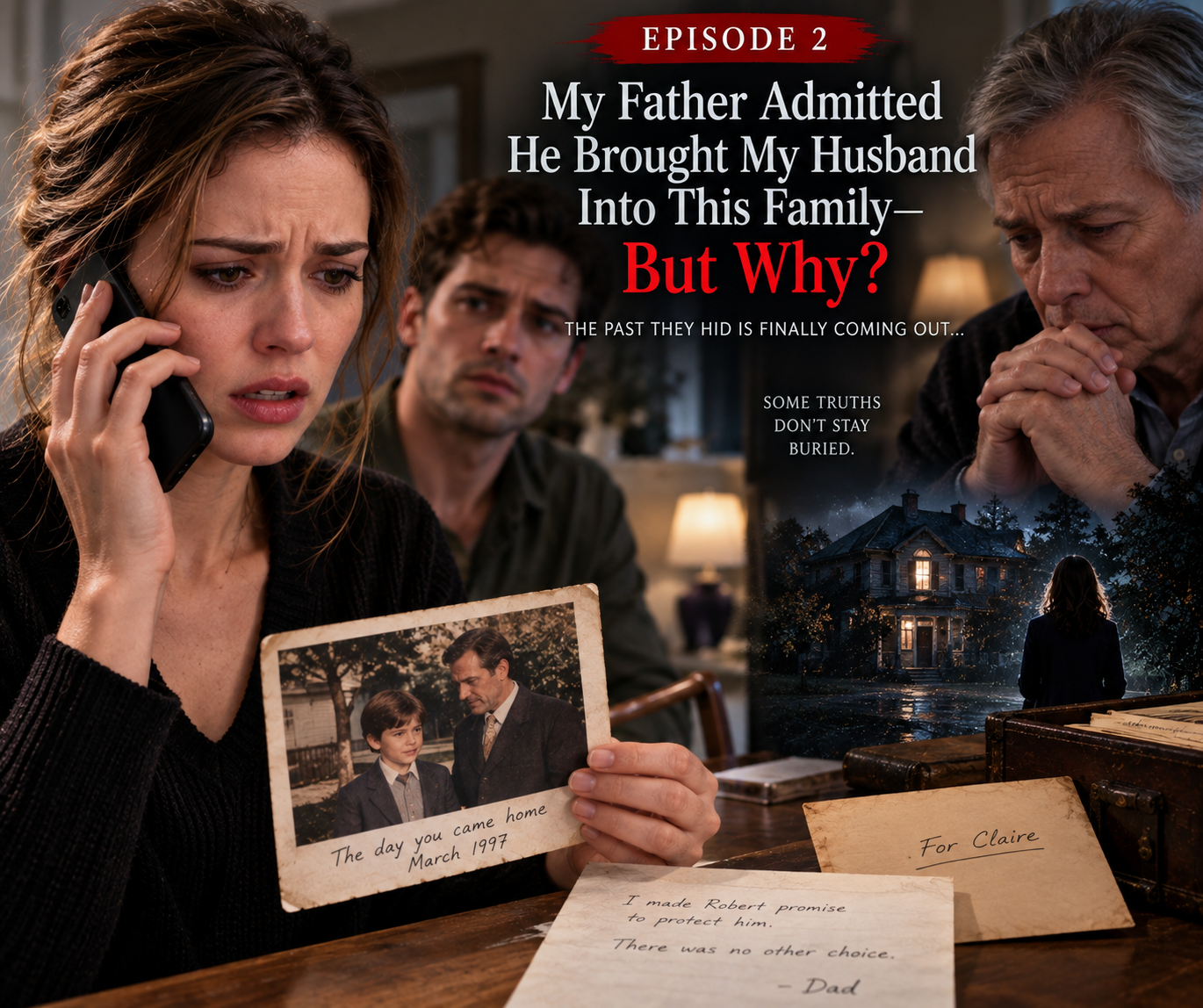
My Father Admitted He Brought My Husband Into This Family—But Why?
My father called back eleven minutes later and said, “Claire, before I tell you anything, get Daniel out of that house.” I looked across the dusty bedroom. Daniel was still holding the hospital bracelet with his biological mother’s name on it. “Why?” “Because you’re not alone.” Every hair on my arms lifted. I turned toward the hallway. Nothing. “Dad, what are you talking about?” “The house.” “What about it?” “There’s someone else there.” Daniel heard him. He walked toward me. “Put
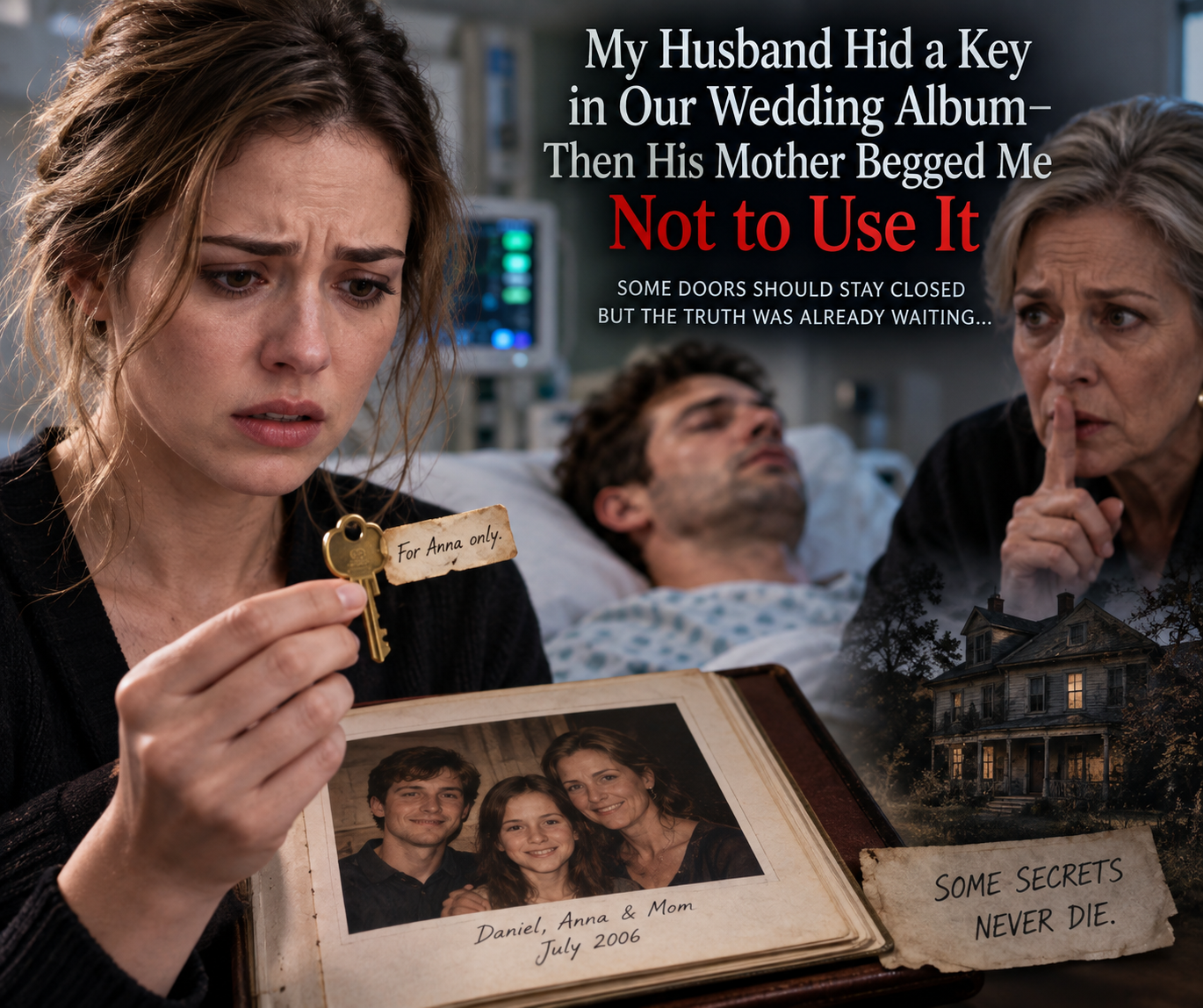
My Husband hide a key in our wedding album then his mother begged me not to use
My husband was unconscious in the emergency room when his mother grabbed my wrist and whispered, “Whatever you find in his wallet, don’t go to that house.” I stared at her. “What house?” Her face changed immediately. “I shouldn’t have said anything.” That was when the nurse returned Daniel’s belongings to me. His phone. His watch. His wedding ring.
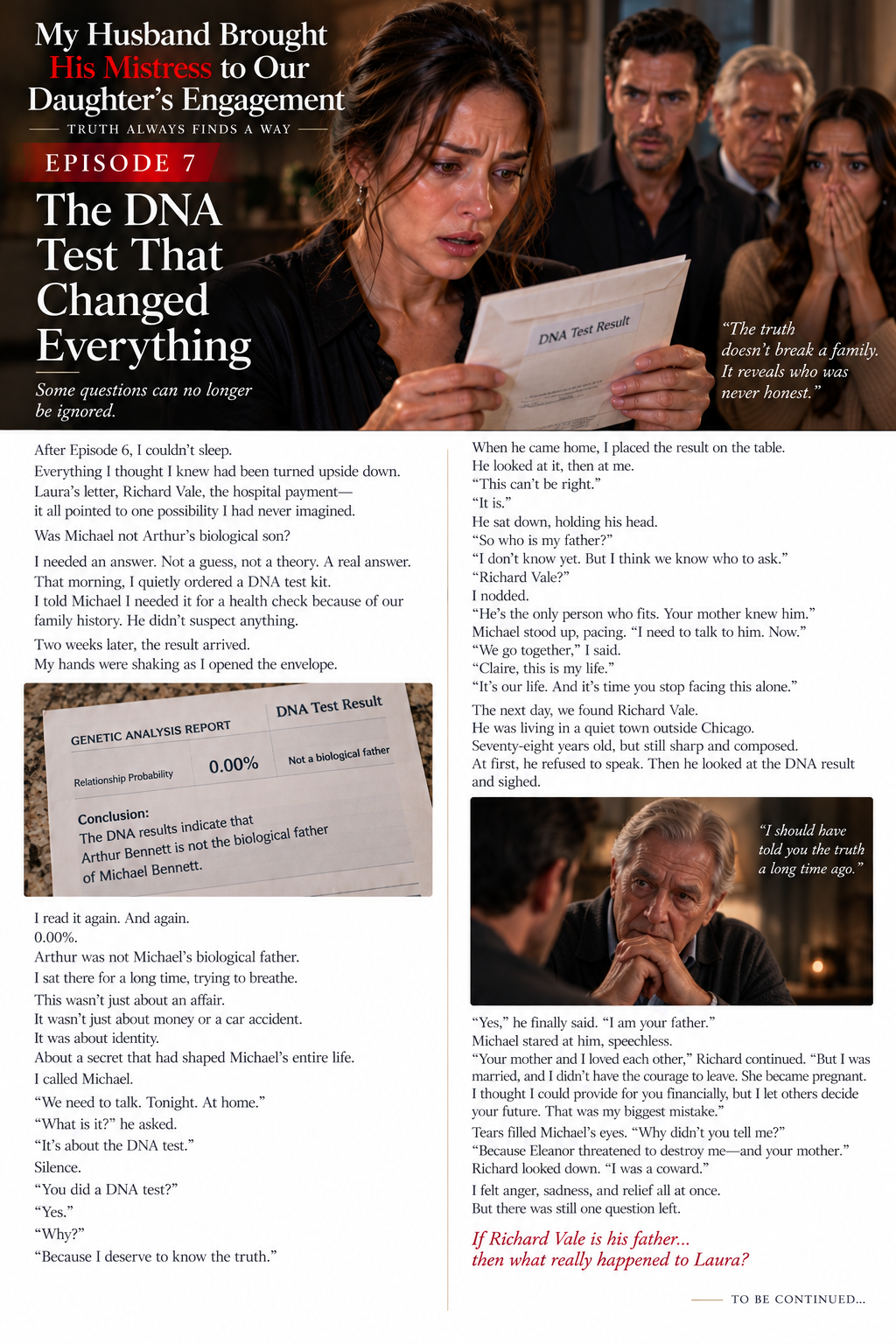
Episode 7 — The Secret Hidden in Michael’s Birth
Michael stared at the photograph for almost a minute. Laura. Eleanor. Arthur. Richard Vale. Four people standing in front of the Bennett house. On the back, Laura had written: Ask Eleanor why Richard paid the hospital. Michael finally looked at me. “You think Richard is my father.” “I think Laura wanted you to ask why he paid for something connected to your birth.” “That’s not the same thing.” “No.” “Then don’t say it like it is.” “I didn’t.” Rachel sat quietly across from us.
Recommended for You
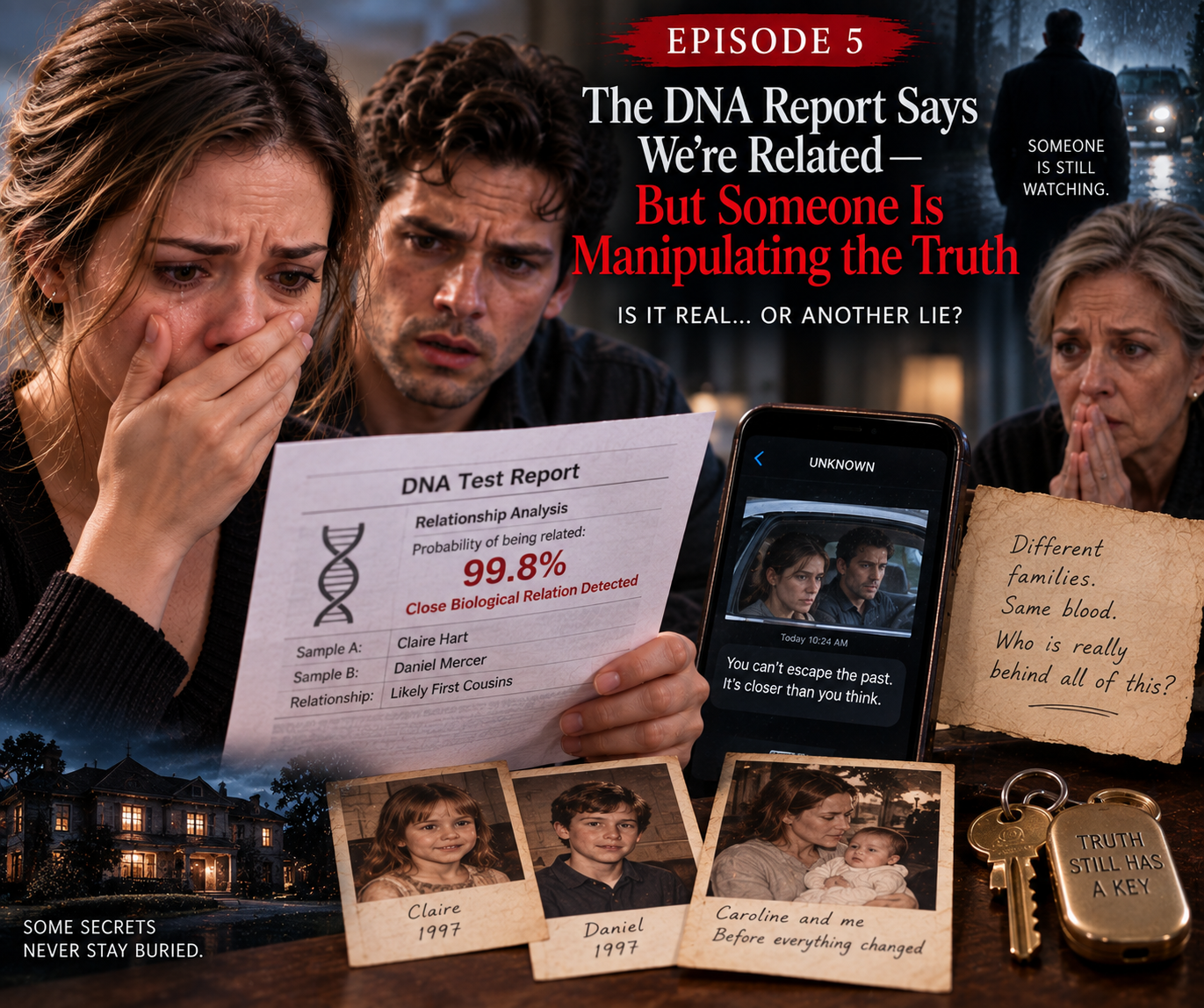
The DNA Report Said My Husband and I Were Related—Then I Saw Where the Samples Came From
“The report says we’re related.” Daniel’s words stayed in my ear. I was still standing beside Lena at the bus station. “How related?” He didn’t answer. “Daniel.” “First cousins.” My stomach turned. Lena grabbed my arm. “That’s impossible.” Daniel heard her. “Apparently not.” “Read the laboratory name,” Lena said.
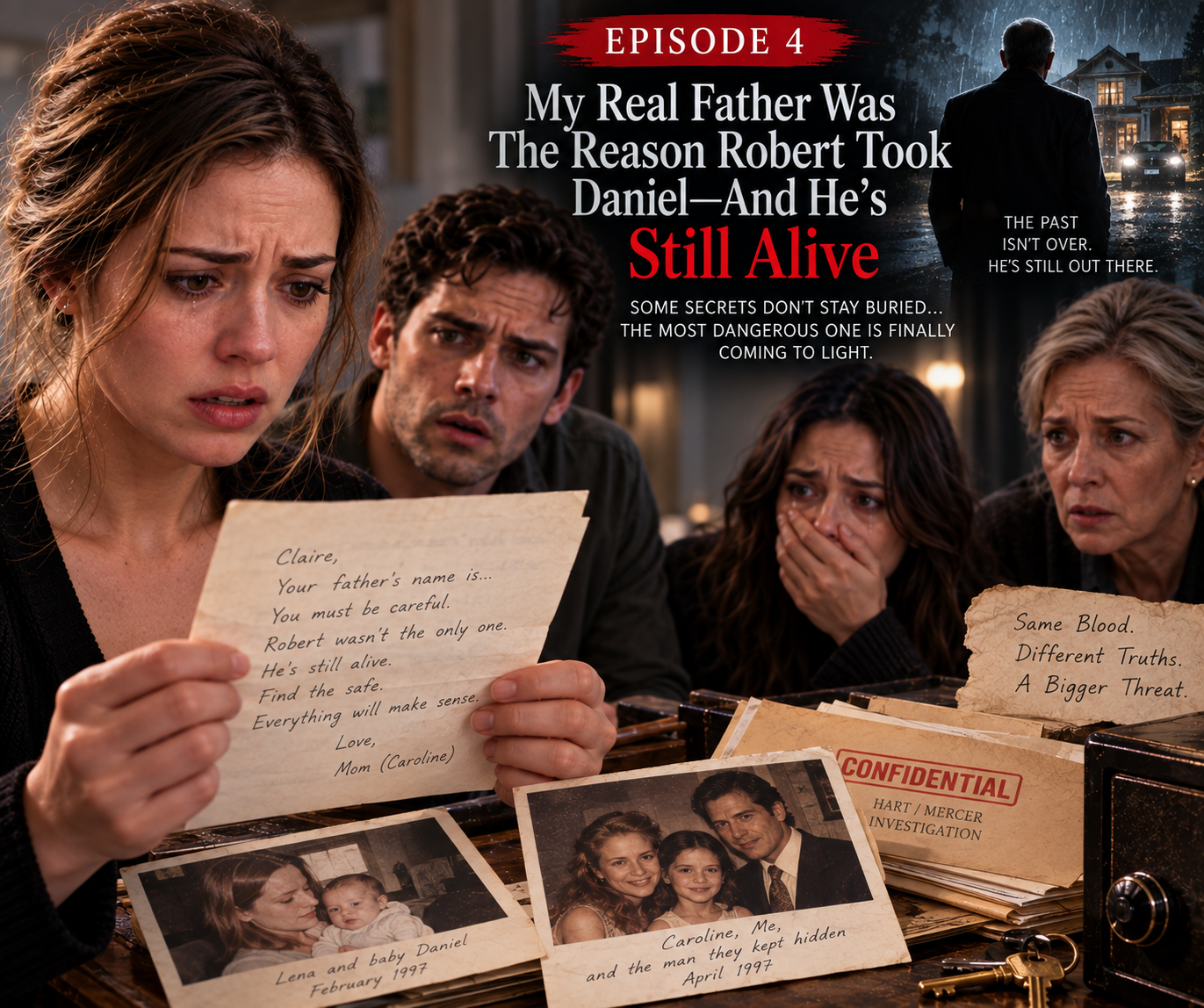
My Real Father Was the Reason Robert Took Daniel—And He’s Still Alive
Three seconds after Lena’s voicemail ended, Anna said, “I know who Claire’s father is.” Everyone turned toward her. I felt Daniel’s hand tighten around mine. “What did you say?” Anna didn’t look at me. She looked at Marianne. And Marianne suddenly looked terrified. “You promised me,” Marianne whispered. Anna shook her head. “No more promises.” I stepped between them. “You both know?” Marianne closed her eyes.
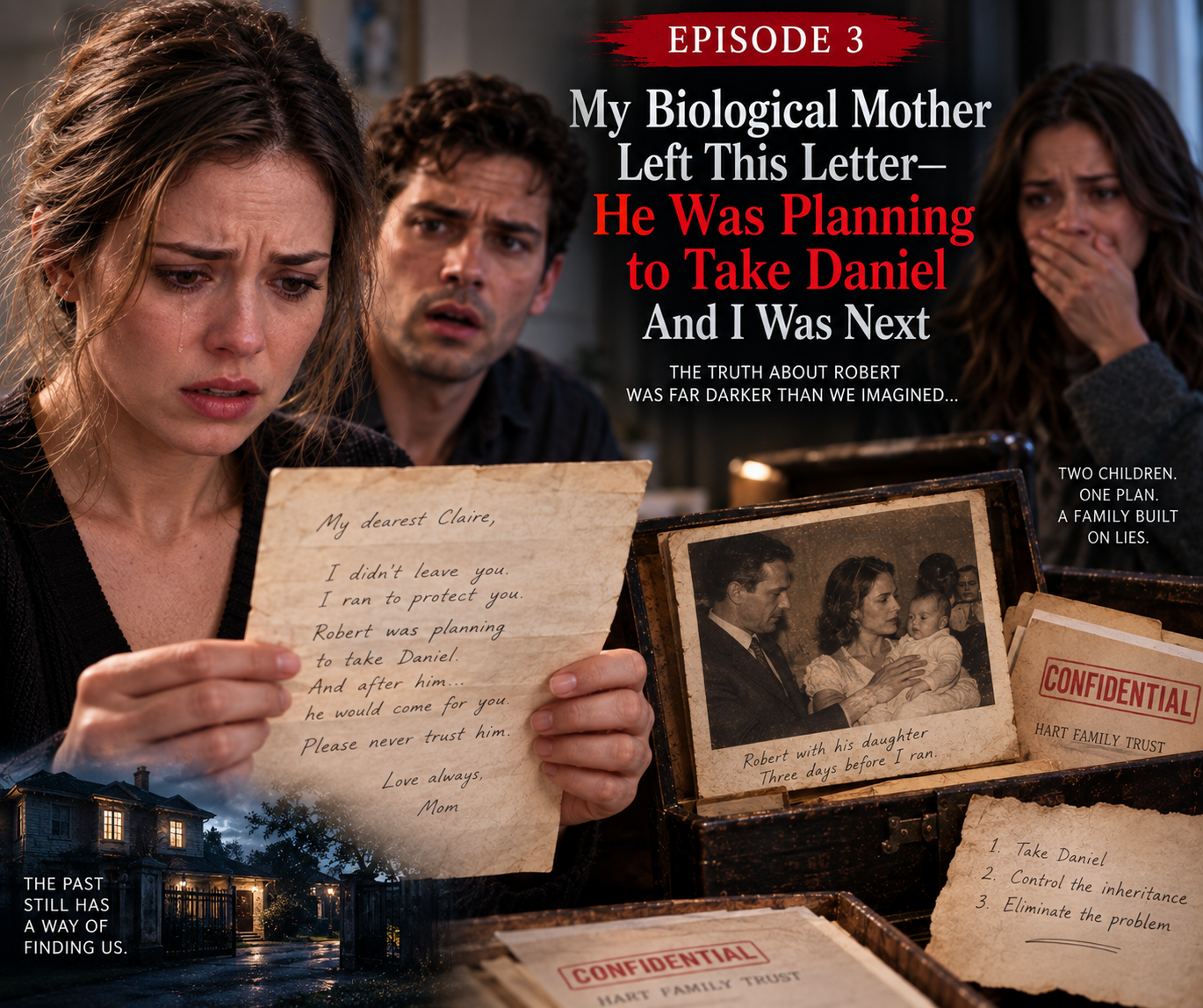
My Mother Ran Away to Protect Me—Then I Learned What My Father Planned for My Husband
The second paragraph of my biological mother’s letter said: Robert was going to take Daniel away. And Thomas helped him prepare the papers. I stopped reading. My father was still on speakerphone. “Dad.” Silence.
Join the discussion
No comments yet. Start the conversation.